

The Jaguar XK straight-six engine frequently options on lists of the highest engines of the twentieth century. It was a sophisticated design that had initially been conceived on the roof of the Jaguar manufacturing facility by engineers on evening fire-watch responsibility in the course of the bombing raids of WWII.
The Jaguar manufacturing facility was essential for the Allied battle effort, they have been repairing army plane in addition to supplying sidecars and trailers to the armed forces. The hearth-watch on the roof frequently featured three of the corporate’s most essential engineers: William Heynes, Walter Hassan, and Claude Baily.
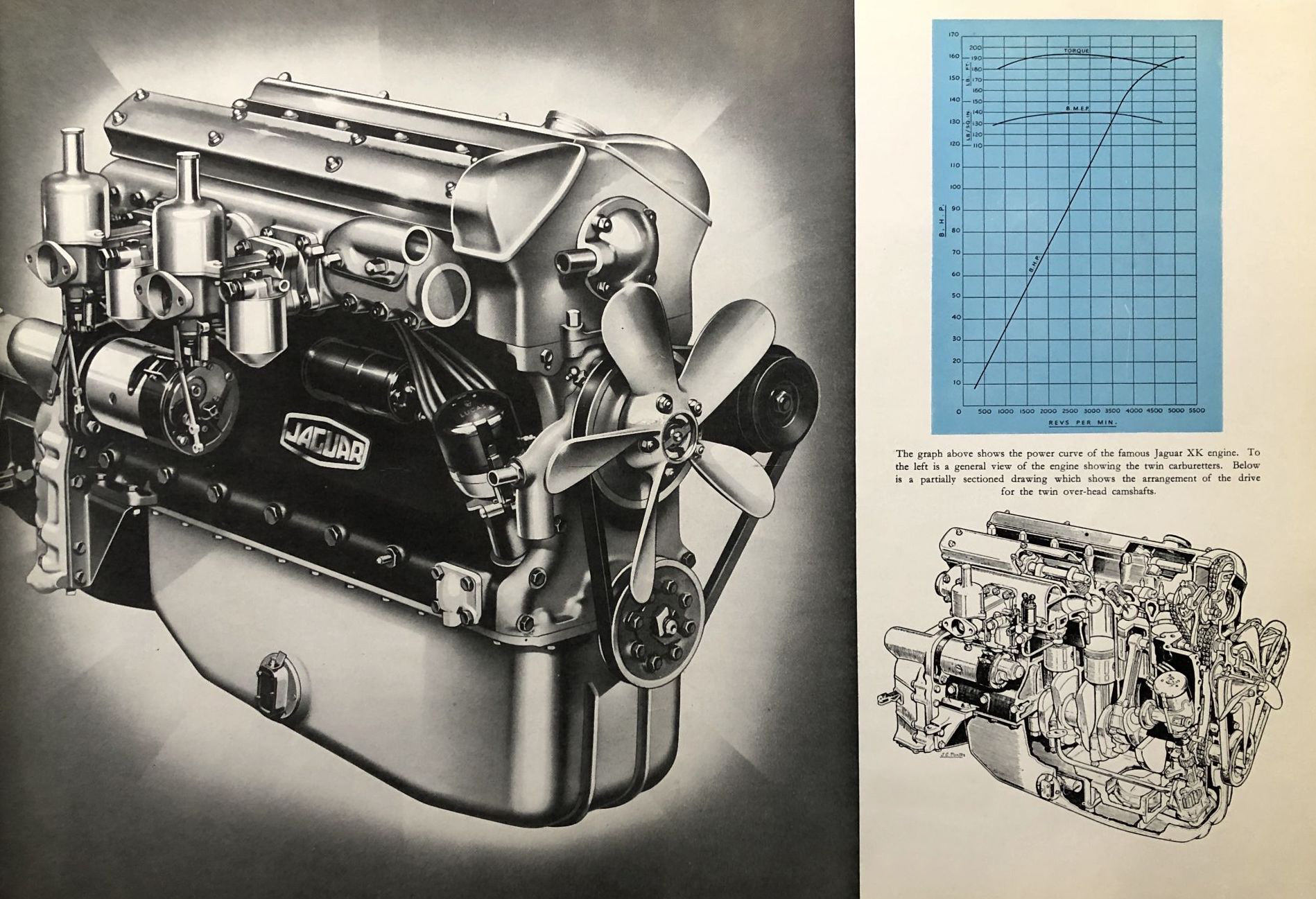
 This Nineteen Fifties illustration of the Jaguar XK engine reveals each the whole engine on the left, and a cutaway of it on the appropriate.
Growing The XK Engine
In what was an act of exceptional optimism in the course of the darkish early days of WWII, the three males started planning a line of engines for post-war manufacturing. The preliminary plan was to develop a small 2.0 liter inline-four and a bigger straight-six for his or her most luxurious and sporting cars.
Finally the inline-four “XJ” was constructed and examined, adopted by the straight-six “XK” which was instantly favored for its glorious energy output and its clean operation. Heynes, Hassan, and Baily knew they wanted to develop a future proof engine that would stay in manufacturing for a few years with no need redesigning or alternative.
With this in thoughts they designed each the XJ and the XK with double chain pushed overhead cams, vee-opposed valves, hemispherical combustion chambers, and a light-weight, forged aluminum cross-flow head.

This 1956 picture reveals Jaguar XK engines being examined on dynamometers on the Browns Lane plant in Coventry, England. Picture courtesy of Jaguar Land Rover.
All-In On The Six
Finally the four-cylinder XJ engine could be dropped and a smaller six-cylinder model of the XK could be developed with a displacement of two.4 liters, one liter beneath the three.4 liters of the primary bigger XK engines.
Remarkably the XK engine would stay in manufacturing from 1949 till 1992, a 43 yr manufacturing run that noticed the displacement enhance from 3.4 liters to 4.2 liters, and bigger nonetheless within the palms of privateer racers.
Within the Nineteen Fifties racing variations of the XK engine would win numerous races together with the 24 Hours of Le Mans, which it received twice within the C-Kind and thrice within the later D-Kind.
The XK engine would energy a lot of Jaguar’s best post-WWII automobiles together with the XK120/XK140/XK150. The aforementioned C-Kind and D-Kind in addition to the well-known E-Kind, the Jaguar Mark 1 and Mark 2, the Jaguar S-Kind, the XK6 and various others.

This image was taken on the 1948 London Motor Present – the automobile within the decrease left of this picture is the Jaguar XK120, sitting subsequent to an open instance of its personal chassis and engine. Picture courtesy of Jaguar Land Rover.
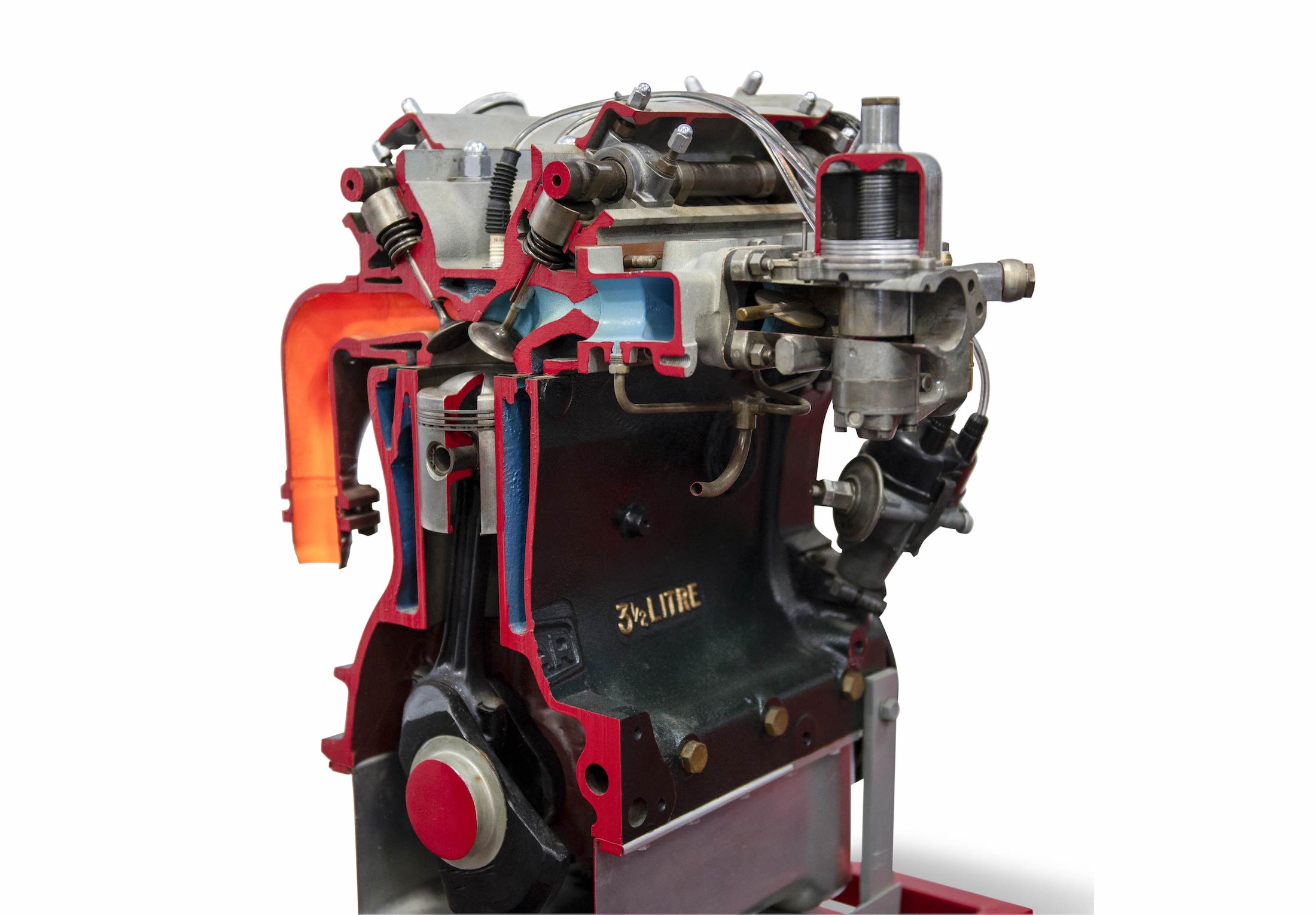
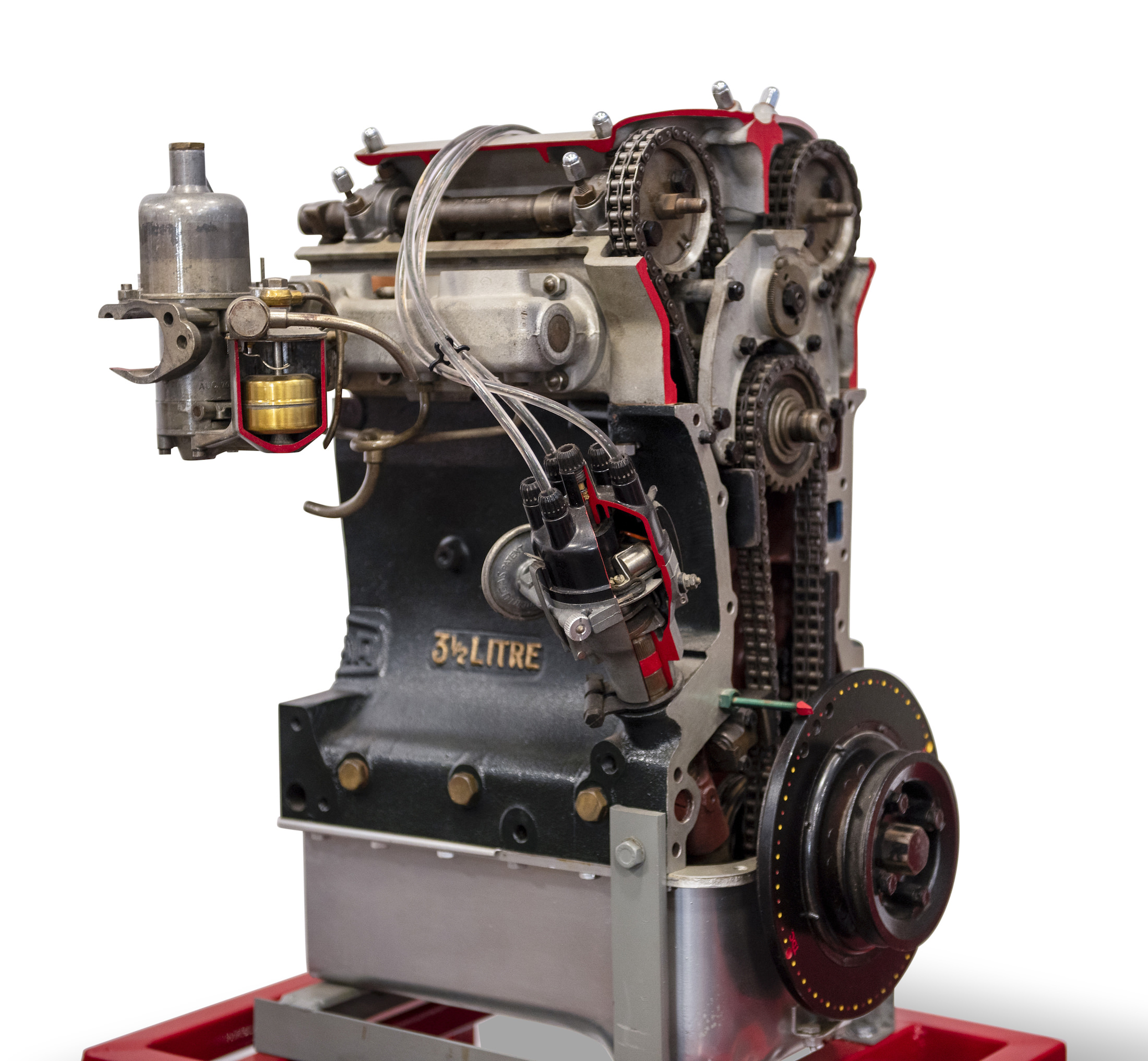
The XK Engine Cutaway Proven Right here
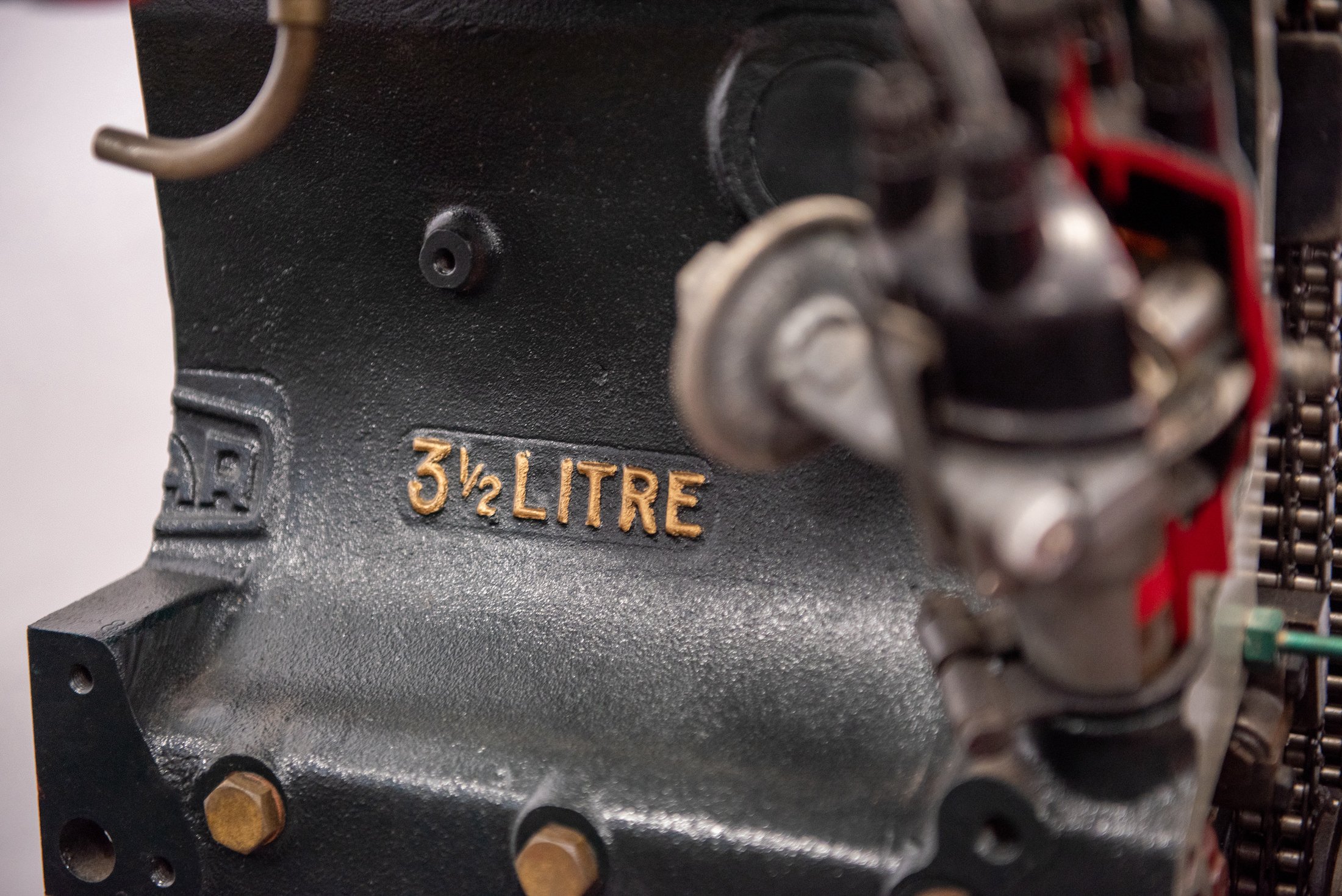
The XK engine you see right here is basically half and engine, lower after cylinder quantity three to point out off the interior workings of Jaguar’s most well-known engine.
The engine has been lower open in lots of sections and the inside has then been painted with coloration coding to assist present the engine’s varied capabilities. You’ll be able to see immediately into the SU carburetor, together with into the float bowl.
It’s also possible to see into the distributor, into the cam covers, and maybe most significantly into the cylinder itself with the valves, piston, connecting rod, and crankshaft.
This uncommon show piece is now because of roll throughout the public sale block with RM Sotheby’s in late September with no reserve. For those who’s wish to learn extra about it or register to bid you possibly can go to the itemizing right here.
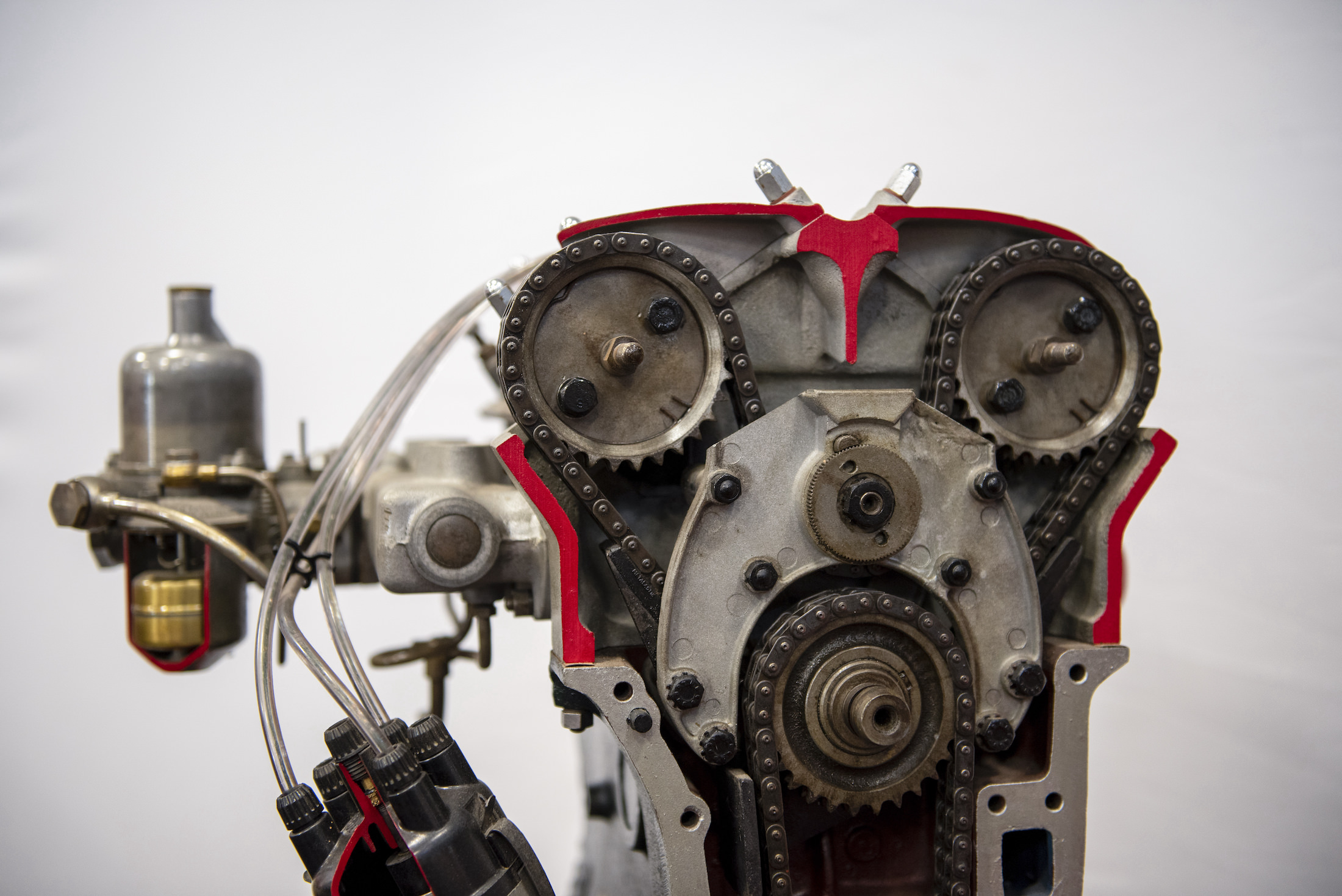
Photos courtesy of RM Sotheby’s
Ben has had his work featured on CNN, Well-liked Mechanics, Smithsonian Journal, Street & Monitor Journal, the official Pinterest weblog, the official eBay Motors weblog, BuzzFeed, and lots of extra.
Silodrome was based by Ben again in 2010, within the years because the web site has grown to turn into a world chief within the different and classic motoring sector, with hundreds of thousands of readers all over the world and lots of a whole bunch of hundreds of followers on social media.