

rewrite this content and keep HTML tags
Things aren’t always what they seem here in the Powersports industry, and this week’s tidbits are a prime example:
- Riser App has been absorbed by Caro and is now rebranded as “Cardo Ride.”
- The long-anticipated CFMoto 1000MT-X has been confirmed to carry a different name – Ibex 950 – into North American markets.
- India’s new tax system is putting a 40% tax on anything above 350cc.
- A sneak peek at a Yorkshire-built steam rocket and how it became the “world’s quickest non-thrust two-wheeler.”
Let’s start with the rebranded app and bike, shall we?
The Conversion to Cardo: Riser App Rebrands as “Cardo Ride”
Major Update Merges 10 Years of RISER Data with Cardo’s Connected Ecosystem

Cardo Systems is officially welcoming the popular RISER riding app to the Cardo team! This new move marks the final integration of the Austria-based navigation platform that Cardo acquired back in 2023, consolidating over a decade of data into a system that will be known from here on out as “Cardo Ride.”
For those of you who have known and loved the RISER app, never fear; we’re told by the official Cardo press release that the main bones of the original app will stick around. Existing users will still be able to see their accounts and their tracked miles (now totaling over 124 million globally), as well as their favorited “Supercurvy” routes. Profiles and ride histories are being fully preserved, and all that will change will be a standard update. 🙂
Now let’s talk about what HAS changed with the rebrand to “Cardo Ride.” According to the release, Cardo Systems has completely rebuilt the app’s Newsfeed from the ground up to make everything more readable and help boost what they’re calling “local community discovery.” A new algorithm now highlights active riders in the local vicinity, making it easier to follow riders in your area and discover nearby hidden-gem routes faster.
Perhaps the most techy upgrade is reWind feature. This used to be an interactive animation, now upgraded to a high-performance, cinematic video file of the ride you just completed, all on a 3D map. Naturally, this ride has been optimized for instant social sharing, thanks in part to the Cardo Connect app’s seamless link, allowing riders to toggle easily between cinematic ride tracking and their device’s intercom settings of choice.
Alon Lumbroso, CEO of Cardo Systems, providing a new and more technologically advanced experience for the rider is a big priority.
-Alon Lumbroso, CEO of Cardo Systems (Cardo press release) |
As if the above weren’t exciting enough, we’re told that Cardo Ride syncs up to typical Cardo hardware but will also remain free and open to all riders of every system inclination, regardless of their communication gear. A quick heads up that if you’re keen to get your hands on advanced features like PackRide notifications, offline maps, and the high-fidelity reWind 3.0, you will be looking at supporting Cardo via the Cardo Ride Pro tier.
Congrats to both Cardo Systems and RISER on the amazing debut of Cardo Ride!
Glocalization Galore: CFMoto 1000MT-X to Debut as Ibex 950
Western Markets Get a Name Closer to the Bike’s Actual Engine Displacement
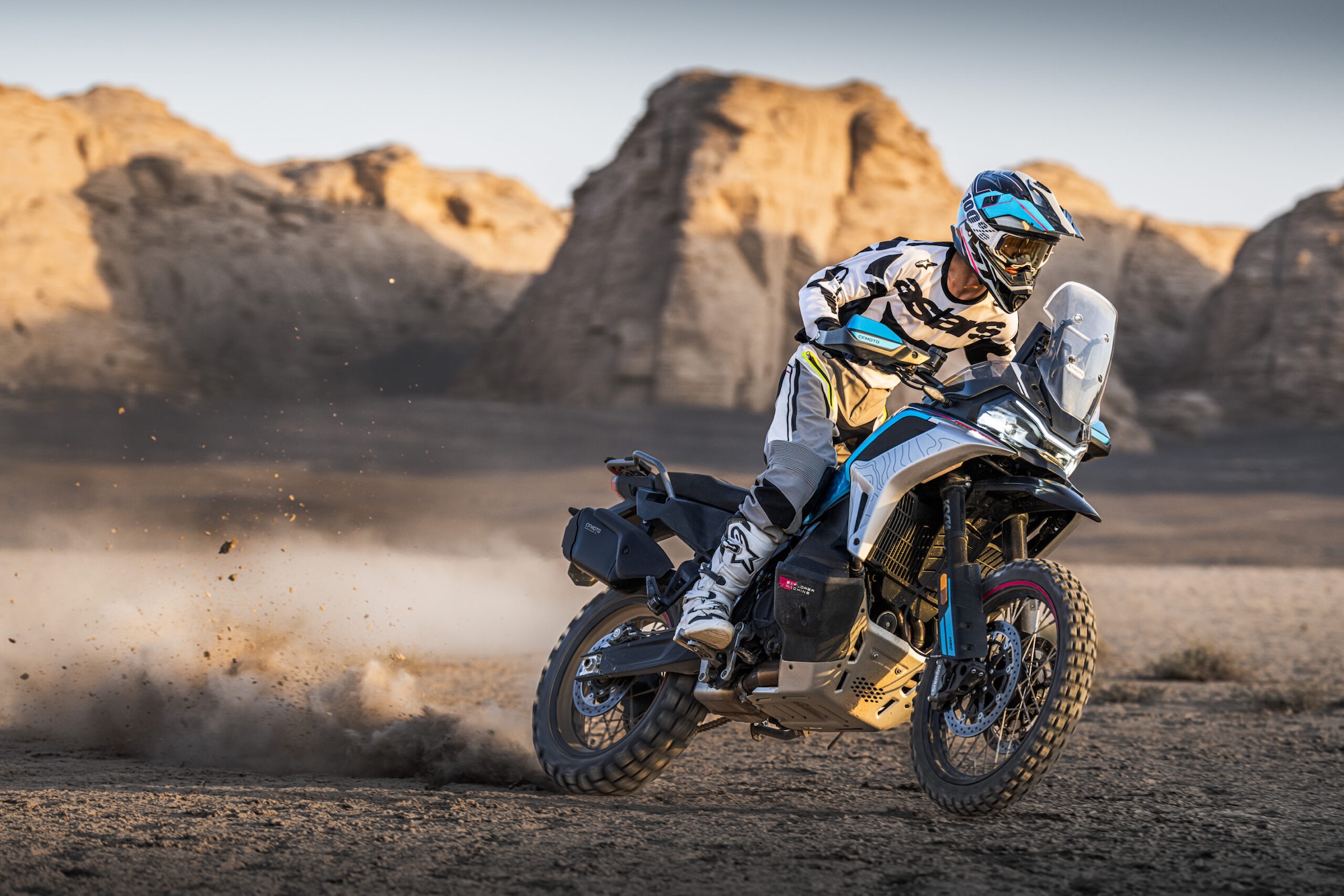
Glocalization is a big word. Remember when we were told that CFMoto was going to give us a big-bore 1000MT-X? Well, we also had to remember that CFMoto’s adventure touring lineup is currently marketed as the MT-X series in many global regions… and that same lineup is marketed under the Ibex brand in the United States.
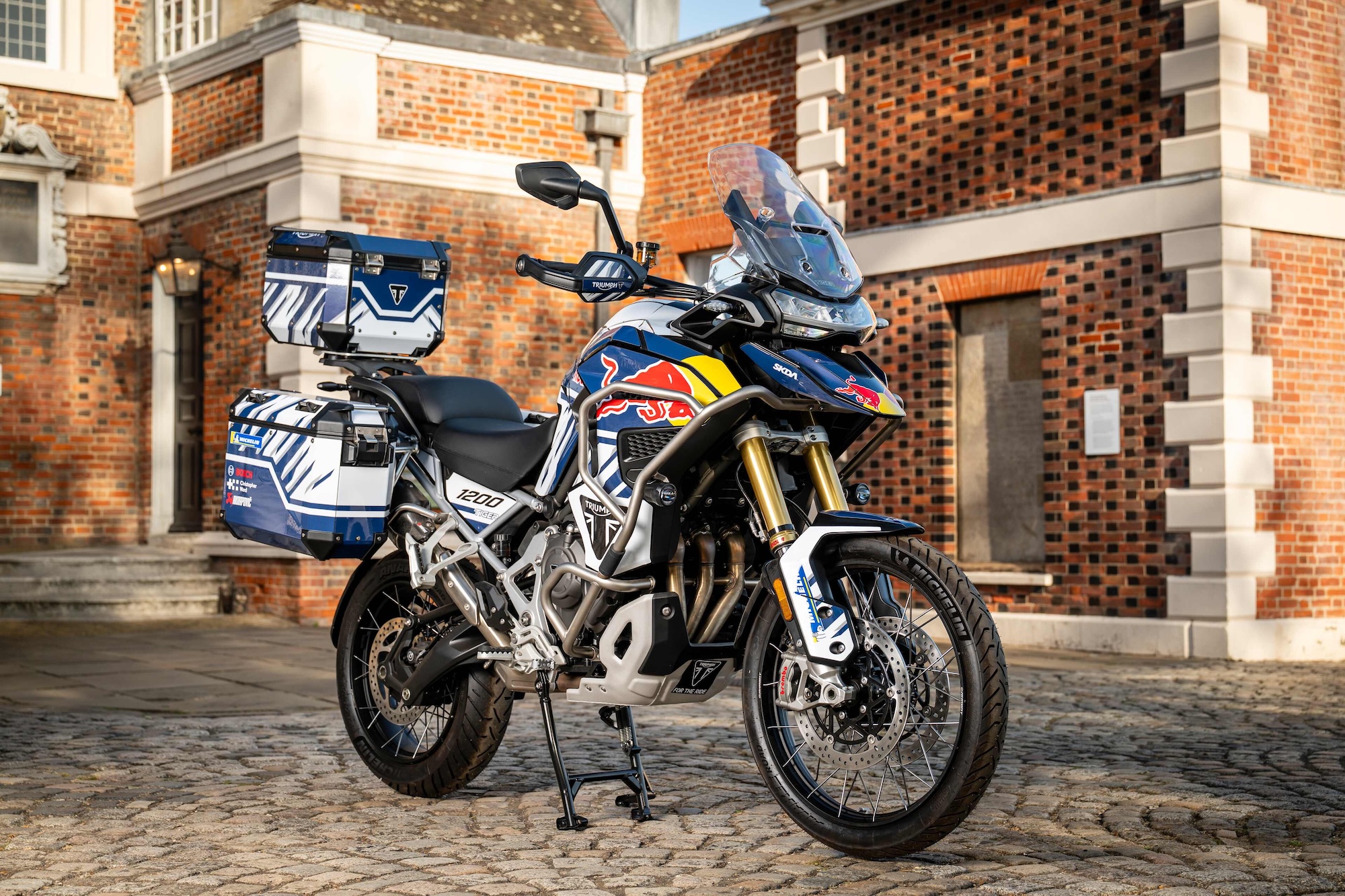
With that out of the way, we would like to present CFMoto’s biggest new-to-US MT-X…err, Ibex. Meet the 2027 Ibex 950, a “glocalized” machine known in other global markets as the 1000MT-X. The Ibex 950 joins the Ibex 450 and 800 while showing off a very nice 946.2cc platform, proving that the displacement is surprisingly pertinent to the Ibex 950 moniker.
Perhaps more surprising is that this engine platform is a version of the second-generation LC8c engine that was housed inside the KTM 990 Duke. In other words, if you needed proof that our economy was doing some raunchy gymnastics on our beloved OEMs, then this bike is all the proof you need. Through their ongoing joint venture, CycleWorld tells us that CFMoto’s debut timeline managed to beat KTM in launching the Ibex 950 before Mattighofen’s own 990 Adventure was revealed. 111 hp and 77 ft.-lb. of torque is what CFMoto is advertising, suggesting that this platform will be a big performance leap up over its 800 sibling. If the specs are on point, the Ibex 950 will also successfully out-muscle pricier competitors currently rolling about in the same category.
On to componentry and hardware/software perks. CFMoto has kitted the Ibex 950 out with five ride modes, a nifty three-mode traction control, and lean-sensitive ABS, as well as a bidirectional quickshifter that comes as standard. The chassis remains predictably trail-ready, dressed with fully-adjustable 48mm KYB forks and a matching monoshock. Stoppage has been given to radial Brembo four-piston calipers biting down on 320mm discs, while CFMoto is expected to offer both a standard and a low seat height, with each measuring around 34.25 inches down to 32.7 inches.
With certification by the Environmental Protection Agency (EPA) already confirmed, we expect to see the Ibex 950 hitting showroom floors in short order.
Be sure to stand by for the official 2027 debut date of the new big-bore Ibex 950!
Industry Insider: Here’s How India’s New Taxation System is Affecting the Motorcycle Market
40% Taxation on 351cc+ Bikes = More Bikes Below 350cc
The global 400cc renaissance has just hit a major regulatory speed bump that will likely spit out more low-displacement bikes by 2027.
How do we know this, you ask? Take a look at the facts:
- India is currently the world’s most prolific motorcycle market. (Market Reports)
- India affects 28% – nearly a third – of the world’s total two-wheeler sales volume, with some reports spiking that percentage as high as 35%. (Market Reports)
- As of September 22 of last year, India’s taxes on motorcycles UNDER 350cc dropped – 35% (from 28% to 18%). (Clear Tax)
- As of September 22 of last year, India’s taxes on motorcycles OVER 350cc shot up +29% (from 31% to 40%). (Clear Tax)
In short, roughly 15-20% of the motorcycle market is about to be affected by this new tax system, and we are already seeing the results. Popular middleweight options like KTM’s 390 series and Triumph’s 400 range have jumped by as much as +12% to +15% as OEMs have transitioned from point-blank absorbing the tax burden to ensuring the payment they get from their product can handle the tax hike.
I had a very interesting front-row seat to the changes this new system had on Royal Enfield when I was invited to ride down to Daytona on their Classic 650, but that’s for another time… soon. 😉
Anyways. Rather than passing the full cost to us – the riders – OEMs are choosing to save money by staying under the lower tax bracket. This will see a 350cc bike offered with nearly the same build quality, suspension, and technology as a bike one power level up, at around one-fifth the price.
The ripples have already begun. Darlings of the 2024-2025 season included Triumph’s Speed 400 and Scrambler 400 X, both of which have had displacement drop just enough to sail under that 40% taxation line. The cost? A slight dip in power from 39 hp to 37 hp. KTM has followed suit with the 390 Duke and 390 Adventure, both of which have dropped from 399cc to 350cc (from 44 hp to 41 hp).
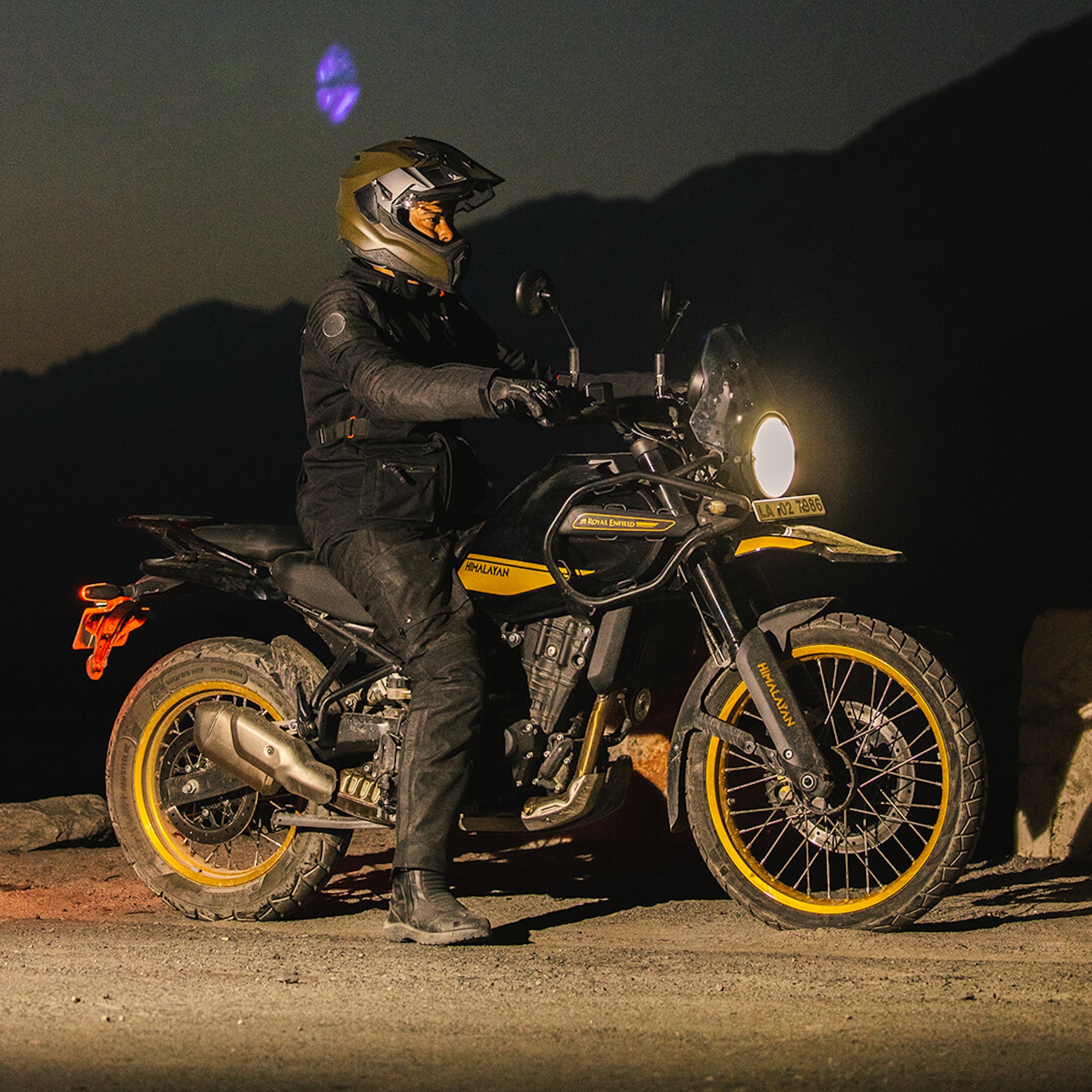
For the Himalayan 450 or the RS 457, the tax-driven price increase effectively erases that budget-friendly advantage over the competition, but hey… all of the above is still a sweet trade-off compared to building a 400cc bike and hiking the price up an inordinate amount for the new model year, right?
For the Record: Steam-Powered Bike is a New “Quickest Non-Thrust Two-Wheeler”
Meet Graham Sykes’ Yorkshire-Built “Force of Nature”
The electric segment may be fighting over new energy density milestones (see last week’s news for the tea), but British engineer Graham Sykes is busy proving that one of the more original alternative fuels – water – still has plenty of punch left in the pot.
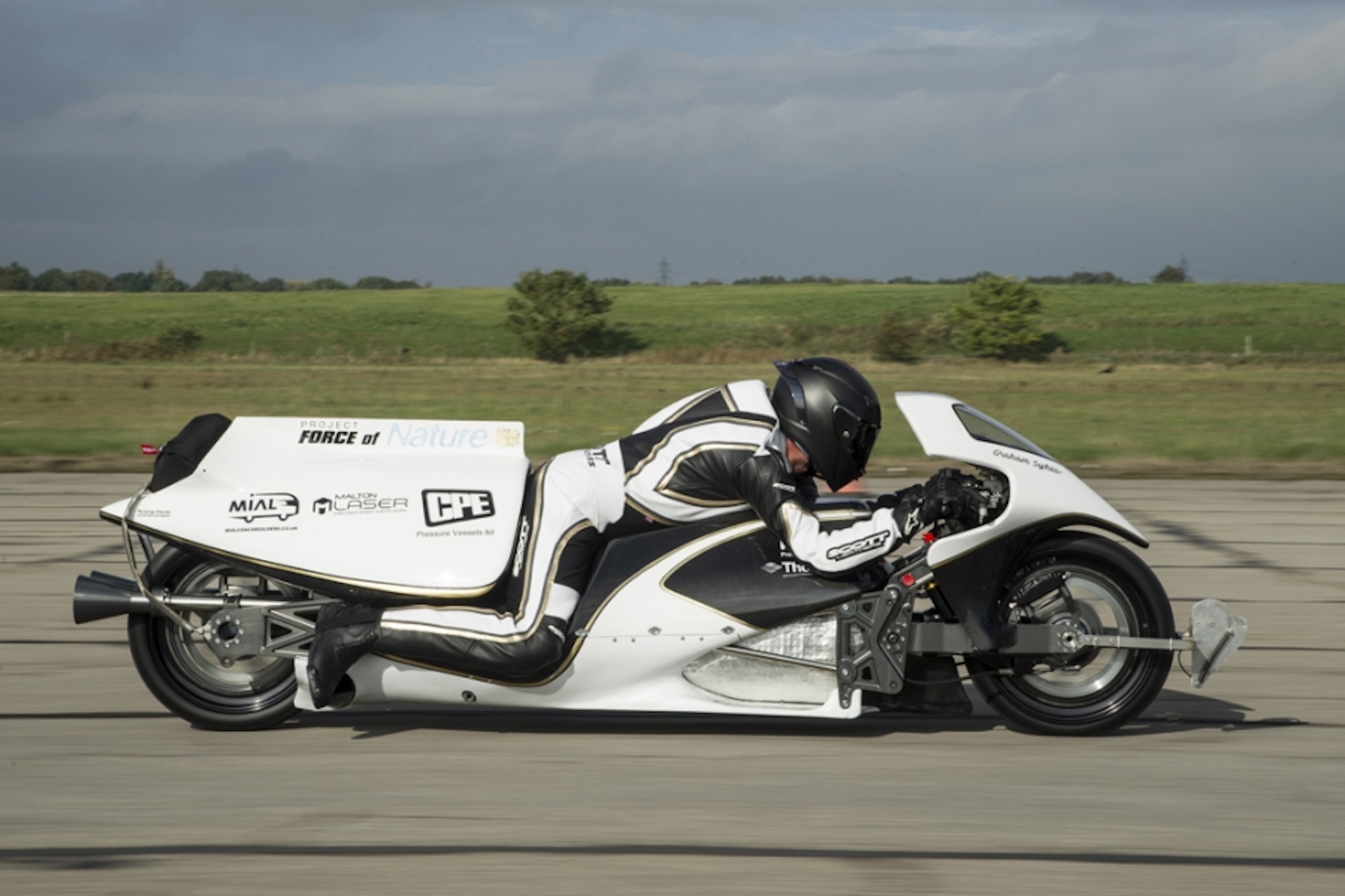
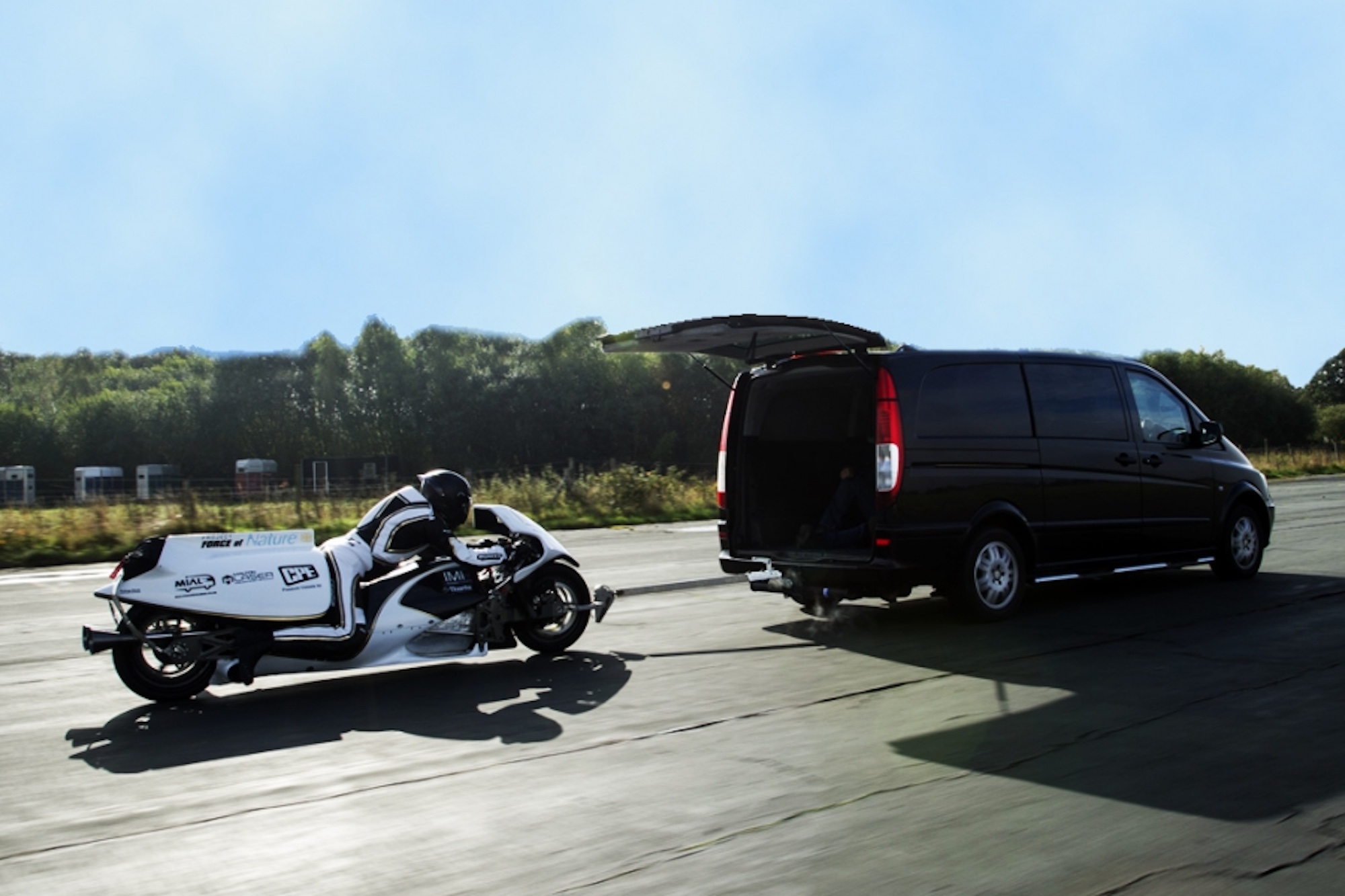
Sykes has a steam-powered rocket bike that he’s christened the “Force of Nature.” This is a bike built with love over six years and through five different iterations in Sykes’ North Yorkshire workshop. If you’re thinking this is a slightly overdone case of the backyard DIY projects rampant on social media, think again. Syke’s steam machine forces a jet of superheated, deionized water through a pair of nitrogen-actuated de Laval nozzles at 1.1 times the speed of sound. When that valve opens, Syke’s Force of Nature breaks the sound barrier with an almighty sonic boom.
It’s also worth noting that this is the same steam-powered rocket that recently decimated records at Santa Pod Raceway, officially becoming the quickest-accelerating steam motorcycle on the planet and the second-quickest in the world.
As for speedy specs, we are told by Sykes’ website that the Force of Nature clocked a quarter-mile time of 5.503 seconds at 192.94 mph, placing it second only to Eric Teboul’s hydrogen peroxide rocket for the official title of world’s quickest motorcycle. Even more insane is the short-track data, showing an eighth-mile sprint finished in a squint-worthy 3.258 seconds at 209.93 mph. As if that weren’t enough, riding the Force of Nature means being subjected to an instant release of 40 liters of water per second – all or nothing, ladies and gentlemen – with a peak acceleration force of around 6.8 G.
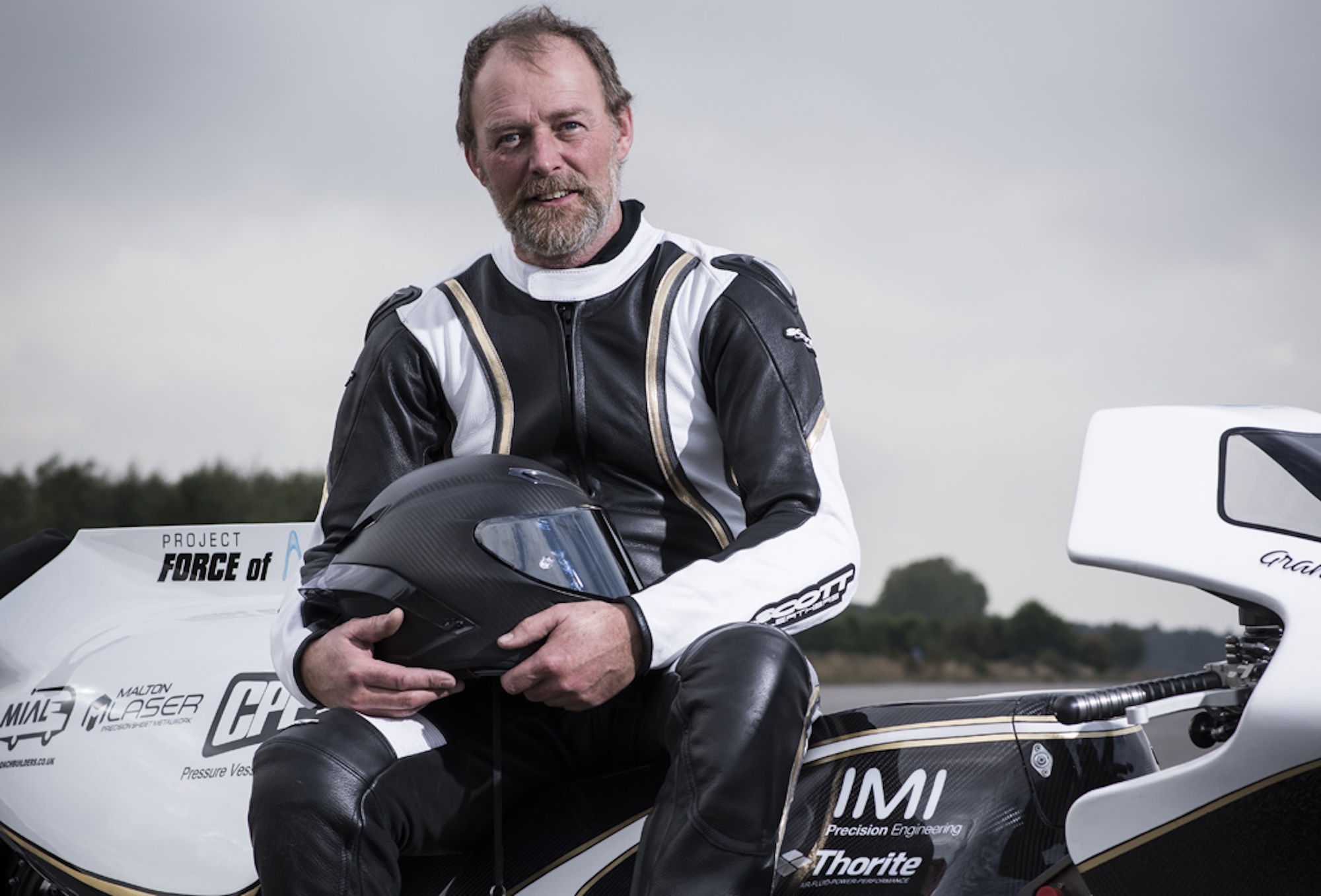
Despite the blistering tempo of the bike’s rocket rate, we are told that the 120-liter pressure vessel requires a good amount of time – about five hours – to reach its 250°C (482°F) operating temperature at 580 psi before being ready for takeoff. This particular boiler is powered by hydrogenated vegetable oil, of all things. What a neat vehicle.
With the 2026 season now in full swing, Sykes is already figuring out ways to shave down time for the next run, reporting to Hagerty that he thinks he can go 0.6 seconds quicker over the quarter mile. Fans can catch the next record-breaking attempt at Santa Pod’s Main Event, scheduled for May 22–25 of this year.