

rewrite this content and keep HTML tags
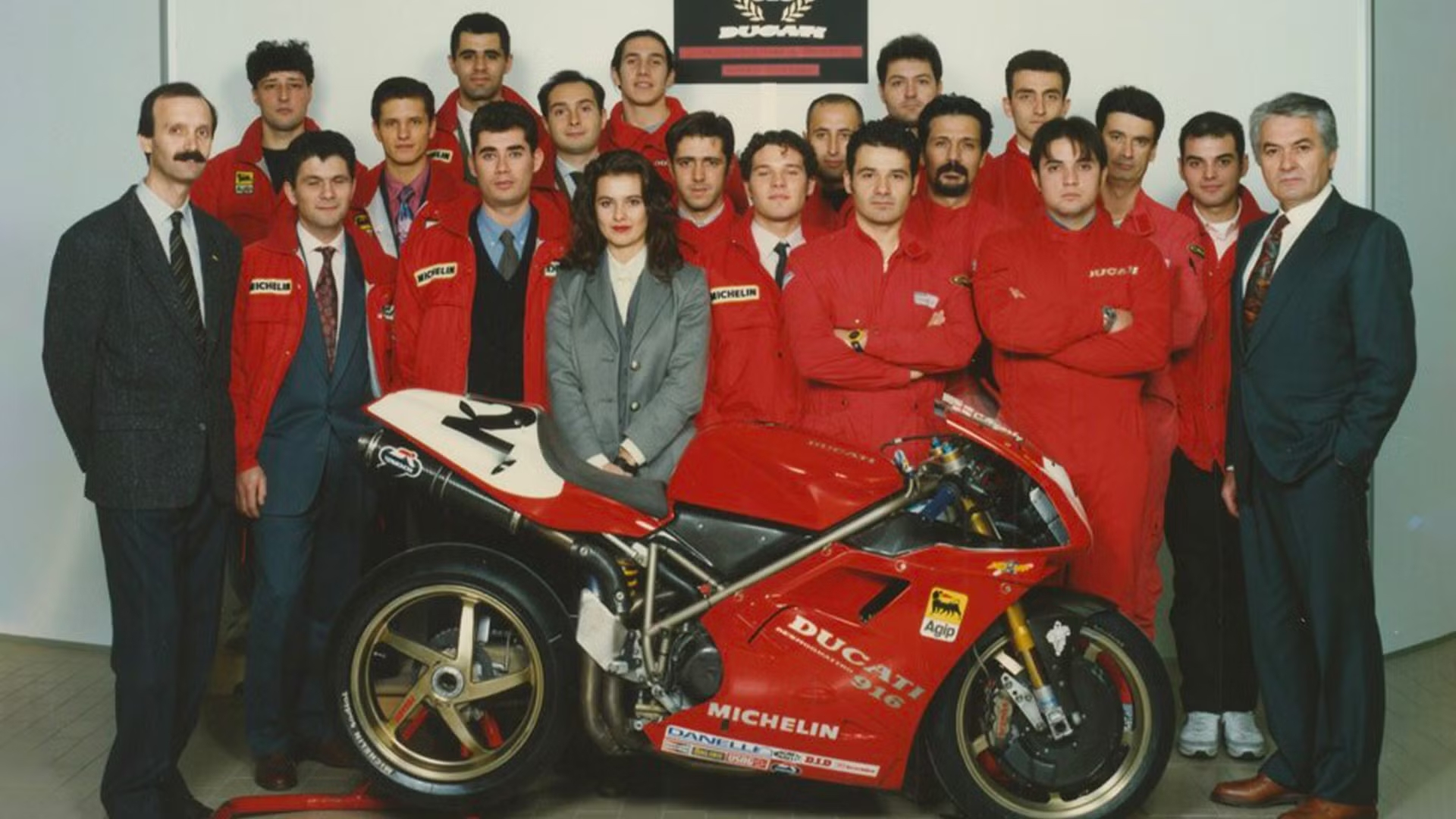
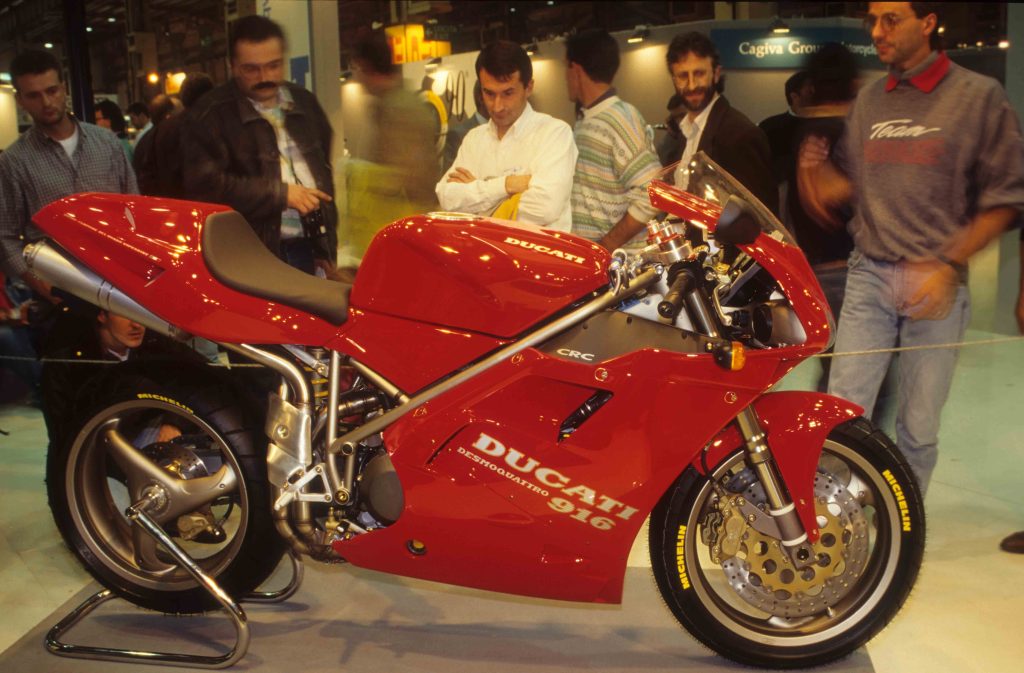
By the early 1990s, Ducati had already proven it could win. Raymond Roche took the World Superbike title in 1990, and Doug Polen backed it up in 1991 and 1992, both riding the factory’s V-twins. Then Scott Russell took a Kawasaki past them in 1993, leaving a small and financially shaky Italian manufacturer without the one thing that gave it any credibility against the Japanese giants. The answer was the 916, a motorcycle so complete that it won the title back immediately and changed what every sportbike after it was expected to look like.
A Company on the Brink
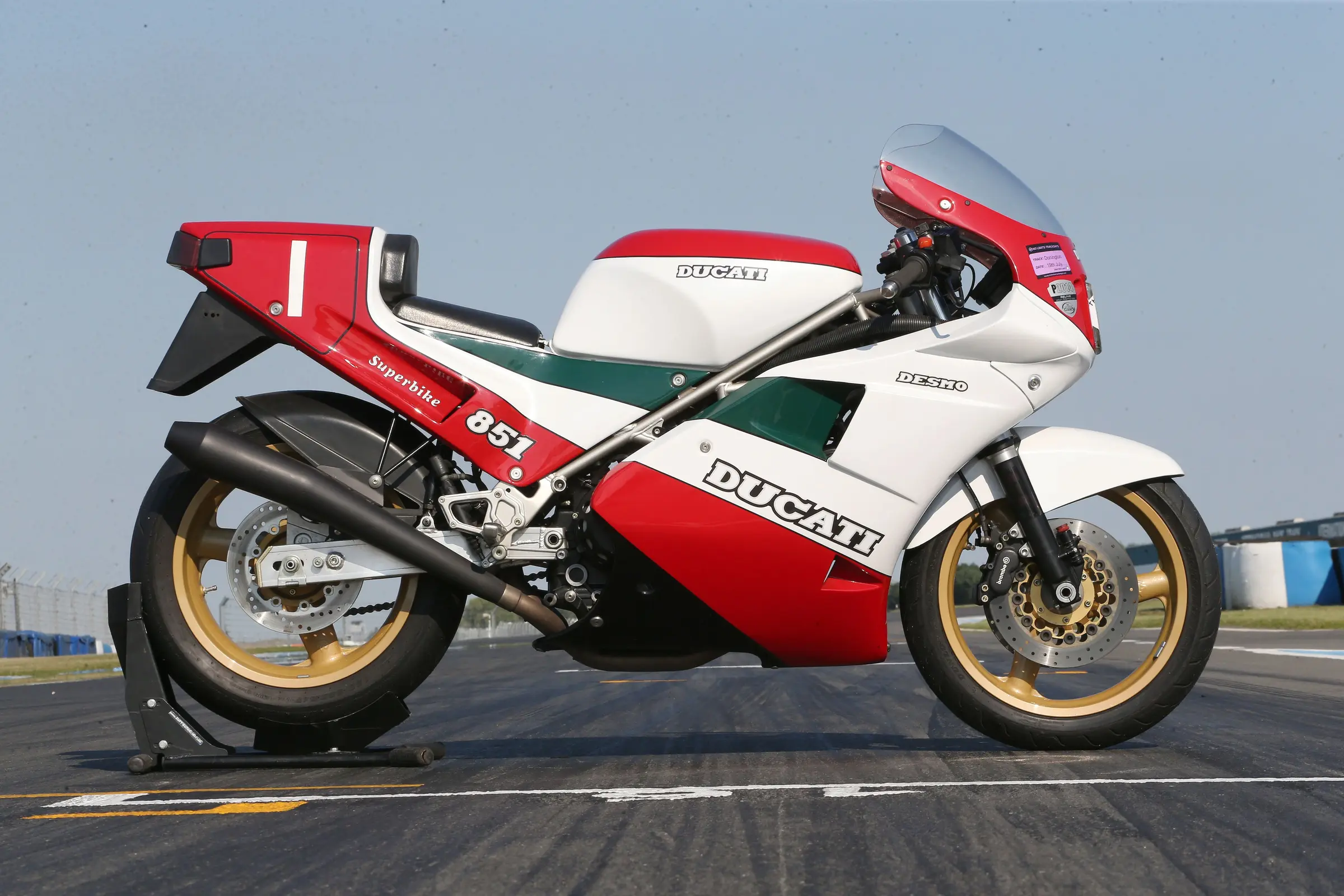 Credit: Bonhams Cars
The ownership situation made the stakes even higher. Cagiva, run by Claudio Castiglioni, had bought the struggling company out of bankruptcy back in 1985, and the rescue came with strings attached: modernize fast, or risk going under for good against relentless competition from Japan. Engineer Massimo Bordi answered with the 851 in 1987, one of the first production motorcycles with fuel injection, built around a four-valve desmodromic V-twin the factory called the Desmoquattro.
That engine won races. The 888, its evolution, carried Roche and Polen to those first three world titles. Racing alone was never going to keep a company this small competitive forever, though, especially once a four-cylinder Kawasaki proved it could beat the twin outright. Castiglioni wanted more than a faster engine bolted into the same old chassis. He wanted an entirely new motorcycle, and he already had someone in mind to build it.
Designing by Instinct
 Credit: Ducati
Castiglioni turned to Massimo Tamburini, a co-founder of Bimota who had already designed Ducati’s Paso 750 and bikes for MV Agusta. This time, Tamburini would own the whole package, chassis and bodywork together, working out of the Cagiva Research Centre in San Marino with a team that started at just five people.
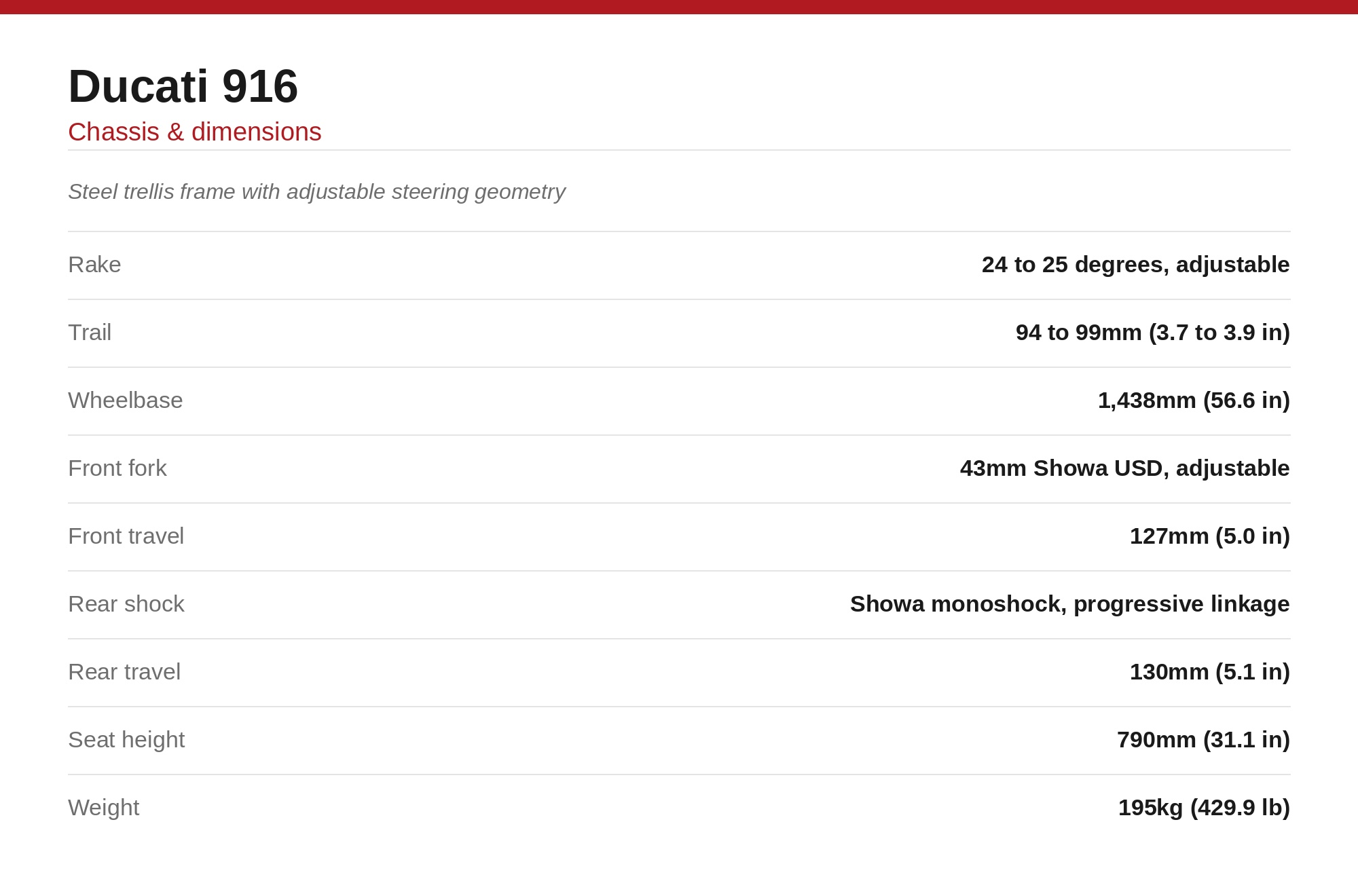
His development process skipped the wind tunnel entirely. Tamburini rode prototypes through the rain on the roads between San Marino and Rimini, then studied how water tracked across the bodywork to judge the aerodynamics by eye. He was just as particular about balance, going so far as to position the battery next to the engine’s front cylinder to keep the weight distribution as close to 50:50 as possible.
 Credit: Ducati
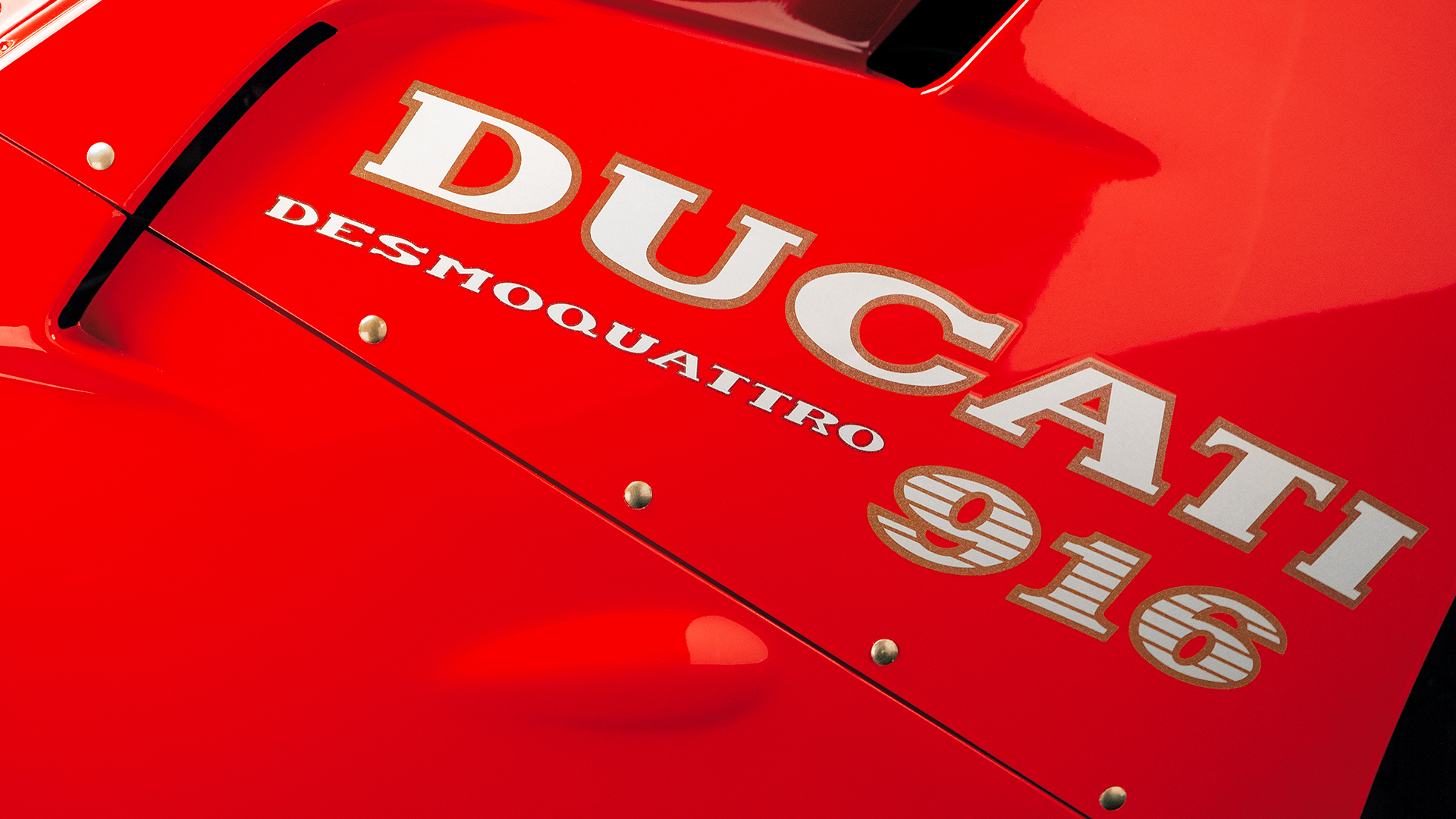
The styling borrowed openly from two places, and Tamburini said as much himself. The pointed nose and narrow waist came from the Ducati Supermono, a race bike designed by Pierre Terblanche. The single-sided swingarm and underseat exhaust came from Honda’s NR750 concept, shown at Tokyo in 1989. The swingarm served a real purpose beyond styling too, letting race mechanics swap a rear wheel in seconds, which mattered enormously once the 916 hit the track.
The underseat exhaust came within a hair of never happening. Early plans called for a side-mounted pipe, similar to a small Cagiva sport bike Tamburini had designed shortly before starting the 916. He moved it under the seat late in development, a change that also happened to leave the tail end of the bike cleaner around the new swingarm.
Total Domination on the Track
 Credit: HotCars
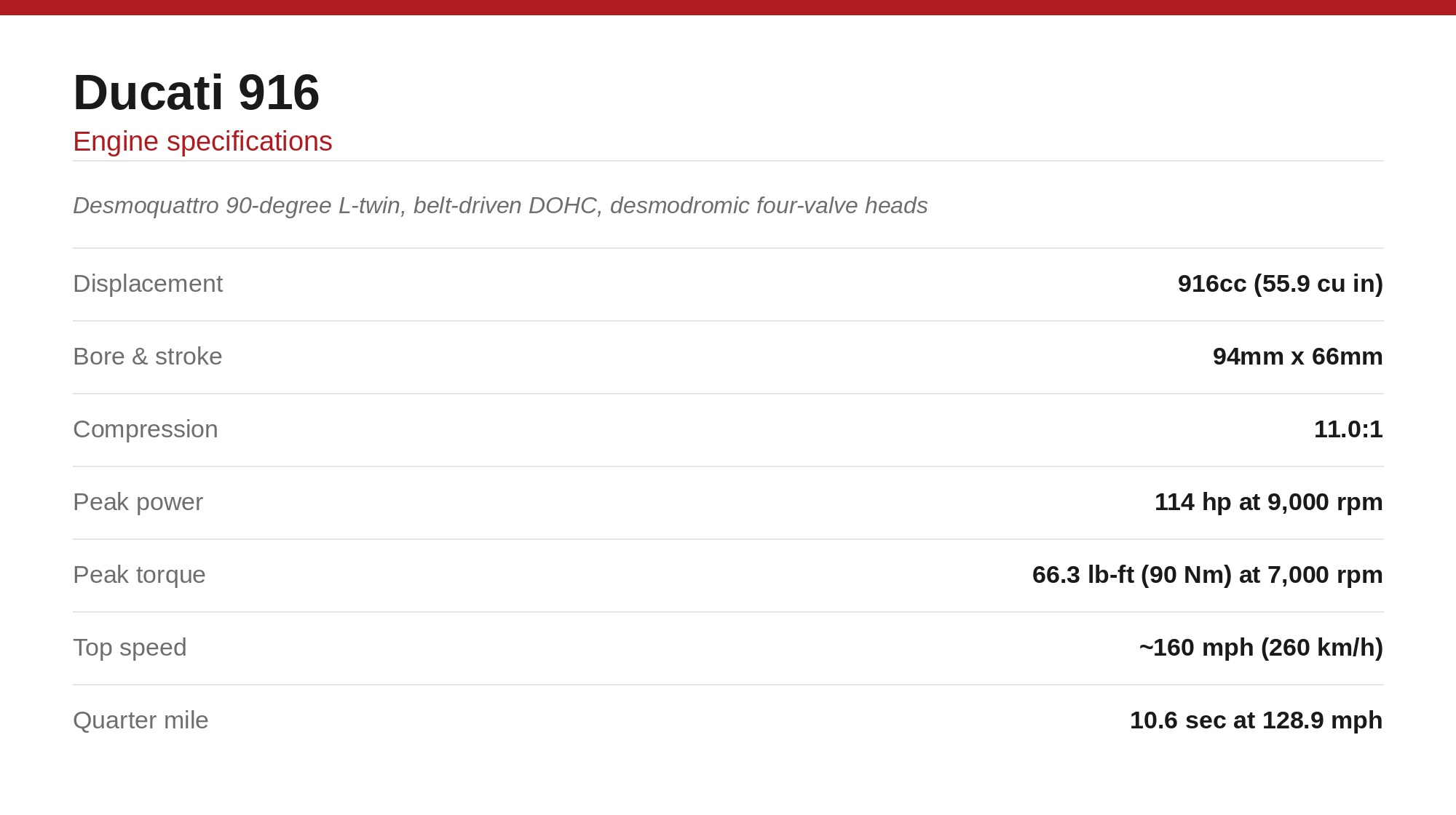
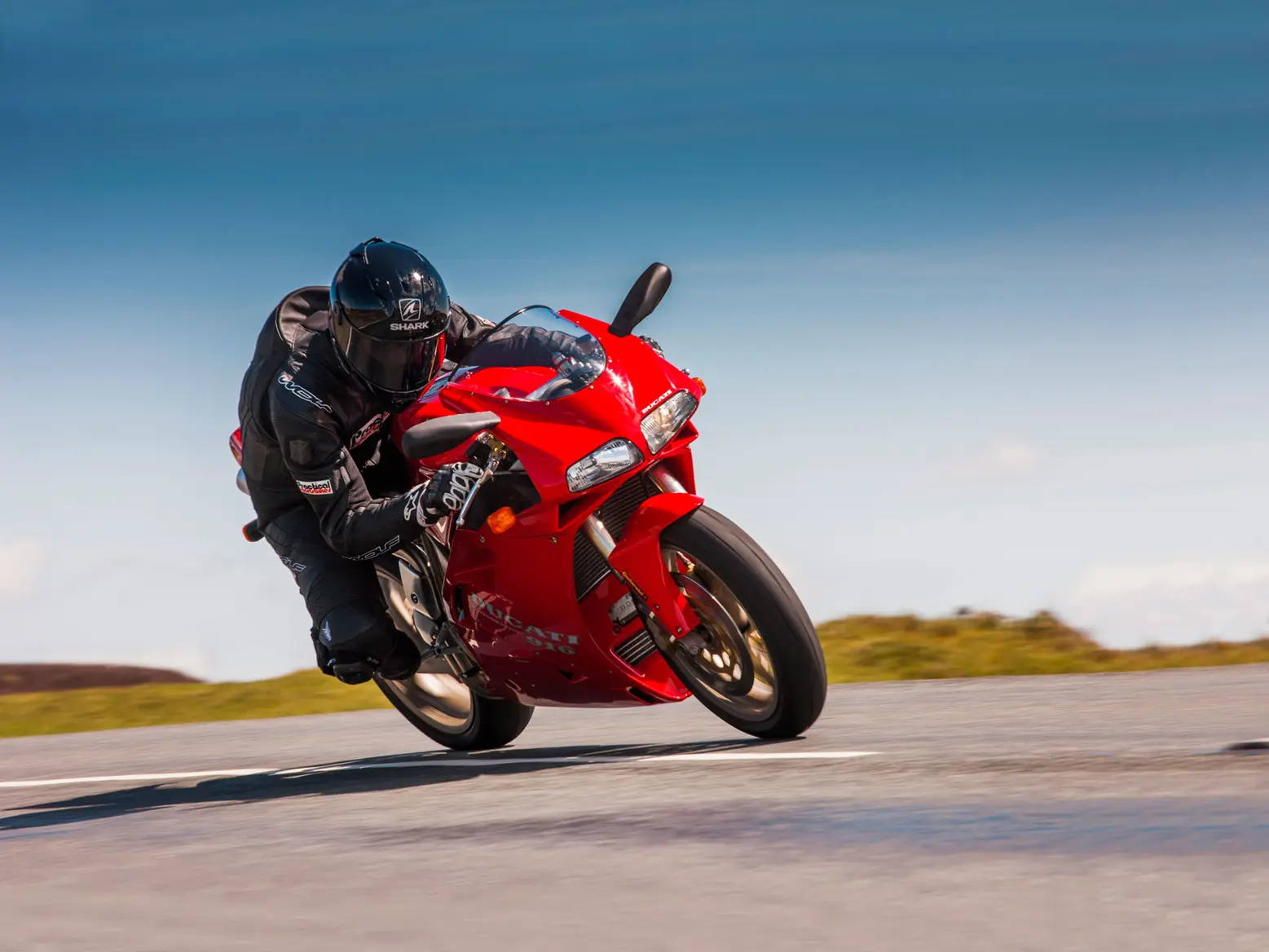
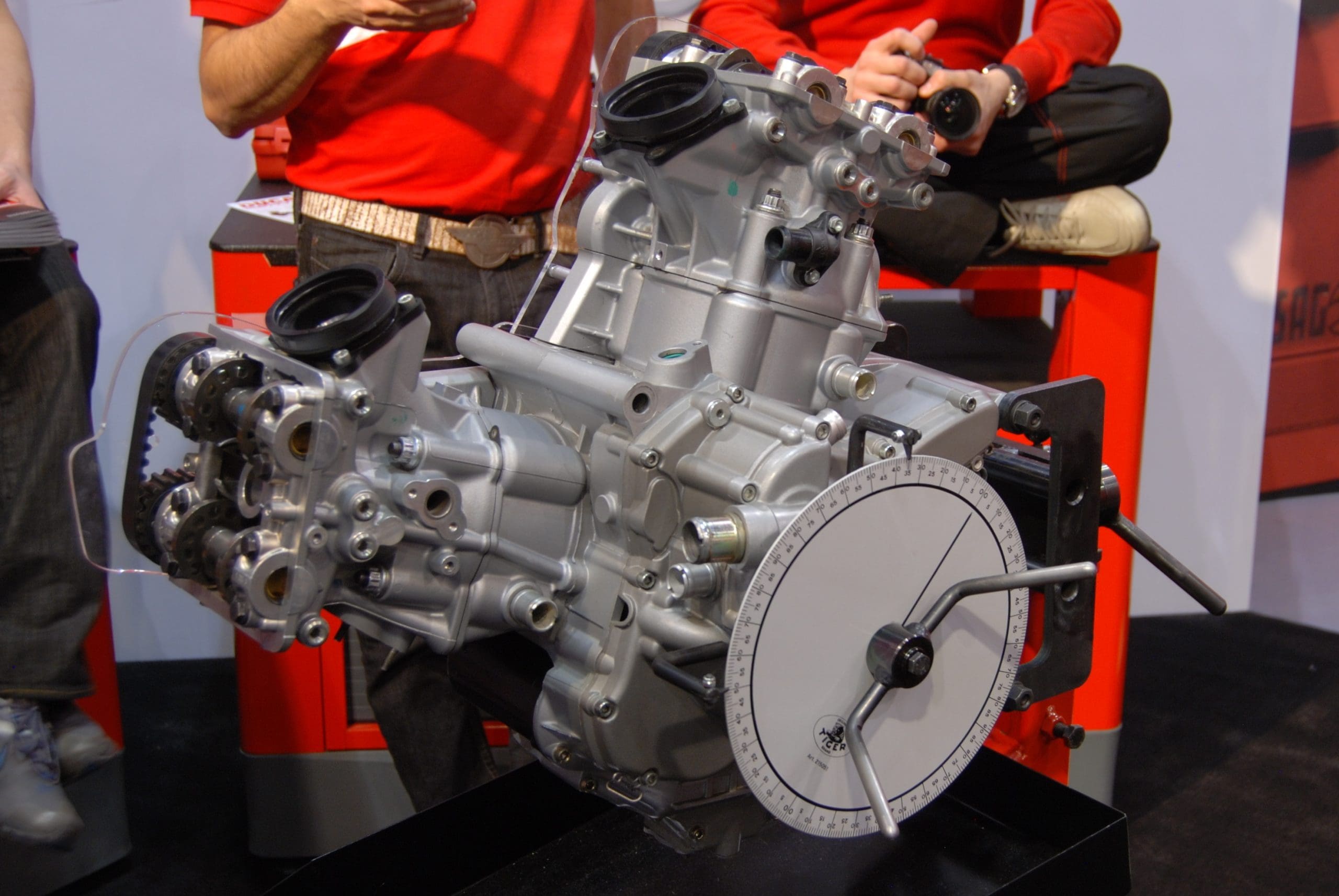
On paper, nothing about the numbers screamed dominance. The first 916 Strada made a comparatively modest 114 horsepower (85 kW), less than some Japanese rivals offered. Ducati’s V-twin fired at irregular intervals compared to a four-cylinder engine, though, and that quirk improved rear tire grip coming out of corners, letting riders get back on the throttle sooner than the competition could manage. A dedicated homologation model, the 916 SP, backed up the effort with racing-spec internals built purely to qualify the bike for competition. Only 310 left the factory that first year.
 Credit: Wikipedia
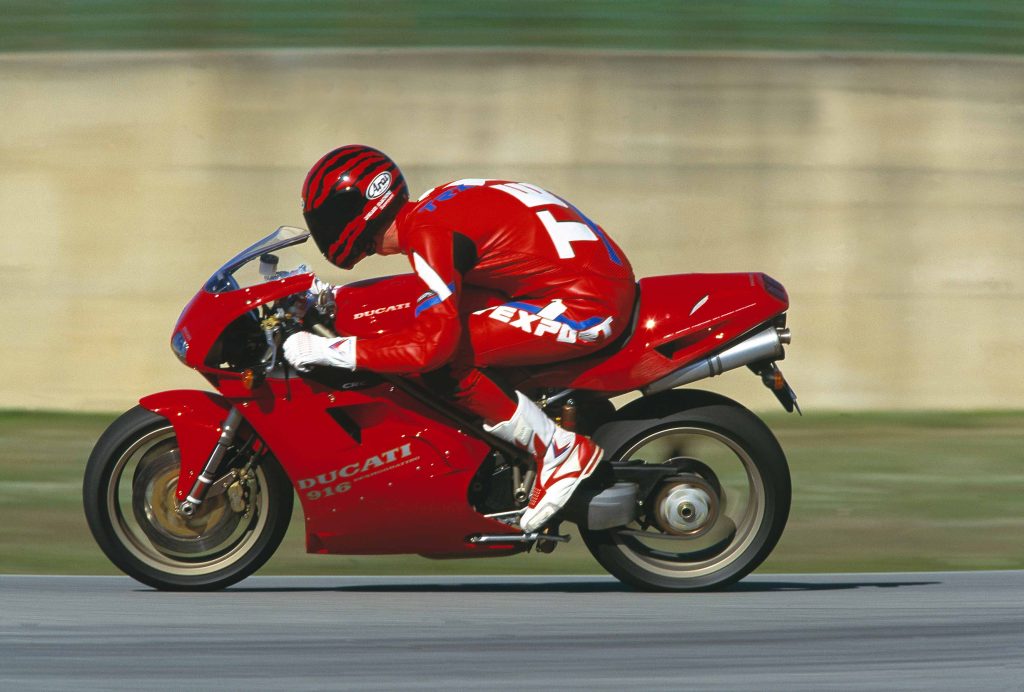
The 916 proved all of this immediately, with no grace period required. Carl Fogarty won 10 races in the 1994 season, its first year of competition, and took the championship on the spot. He followed it up in 1995 with 13 wins, a new single-season record, and a second straight title. Some rivals grumbled that any decent rider could win on a bike that good. Fogarty answered by leaving for Honda in 1996.
 Credit: Roland Brown
Corser took over and delivered a third consecutive World Superbike title for the 916, a reminder that the bike, not the rider, was doing most of the winning. Fogarty’s Honda detour went badly. He returned to Ducati for 1997, only to watch John Kocinski win the title on a Honda RC45, taking nine races and retiring just once, against four wins and four retirements for Fogarty.
 Credit: Roland Brown
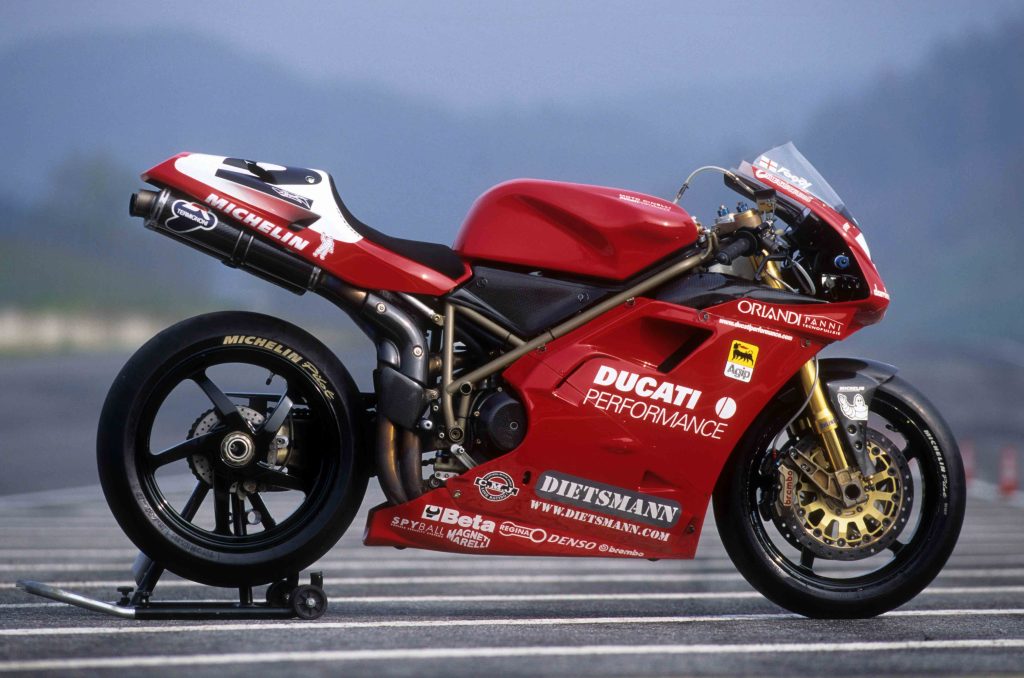
He got it back the following year on a bike built partly in his own honor. Ducati homologated a new frame and airbox through a limited run called the Foggy Replica, just 202 units, one going to Fogarty himself and one to the Ducati museum. His third personal title, and the 916’s fourth overall, arrived that season. A fifth Ducati championship followed in 1999, this time on the 996, a direct descendant of the 916, tying Fogarty for the most titles in World Superbike history, a record that stood for two decades before Jonathan Rea broke it in 2019.
A Tribute Born From Tragedy
One 1995 variant carried more weight than the rest. Ducati had been developing a higher-spec homologation model in partnership with Formula 1 champion Ayrton Senna before his death at the 1994 San Marino Grand Prix. Rather than scrap the project, the factory finished it as a tribute, dialing back the performance slightly and finishing it in black with red wheels. Only 300 were built, and Ducati would return to the idea twice more in later years, each time as a quiet nod to the same driver.
Saving the Company
 Credit: Roland Brown
The 916’s glory on the track brought surprisingly little cash into Ducati in its early years. Production numbers stayed low even as demand grew, since the factory simply lacked the capacity to build them fast enough. Its real contribution was reputational. That new credibility, combined with racing dominance nobody could dismiss as a fluke, made the company a far more attractive investment than a struggling Italian manufacturer had any right to be. In 1996, the Texas Pacific Group bought a 51 percent stake. Two years later, TPG completed a full takeover, giving Ducati the capital and stability it had lacked for over a decade.
The Bike That Actually Paid the Bills
The actual volume seller during those years was the Monster, a stripped-down naked bike launched in 1993 that sold in far greater numbers and generated the everyday cash flow the 916 never quite managed. The two bikes did different jobs for the same company at the same time. One built the image. The other paid for it. Ducati needed both to survive.
A Legacy That Wouldn’t Go Away
 Credit: Collecting Cars
The 916 name officially disappeared within a few years, growing into the 996, then the 998, as displacement crept up to stay competitive. Enthusiasts never really stopped calling the whole family “916s,” though, since every version kept the same silhouette Tamburini had drawn in San Marino.
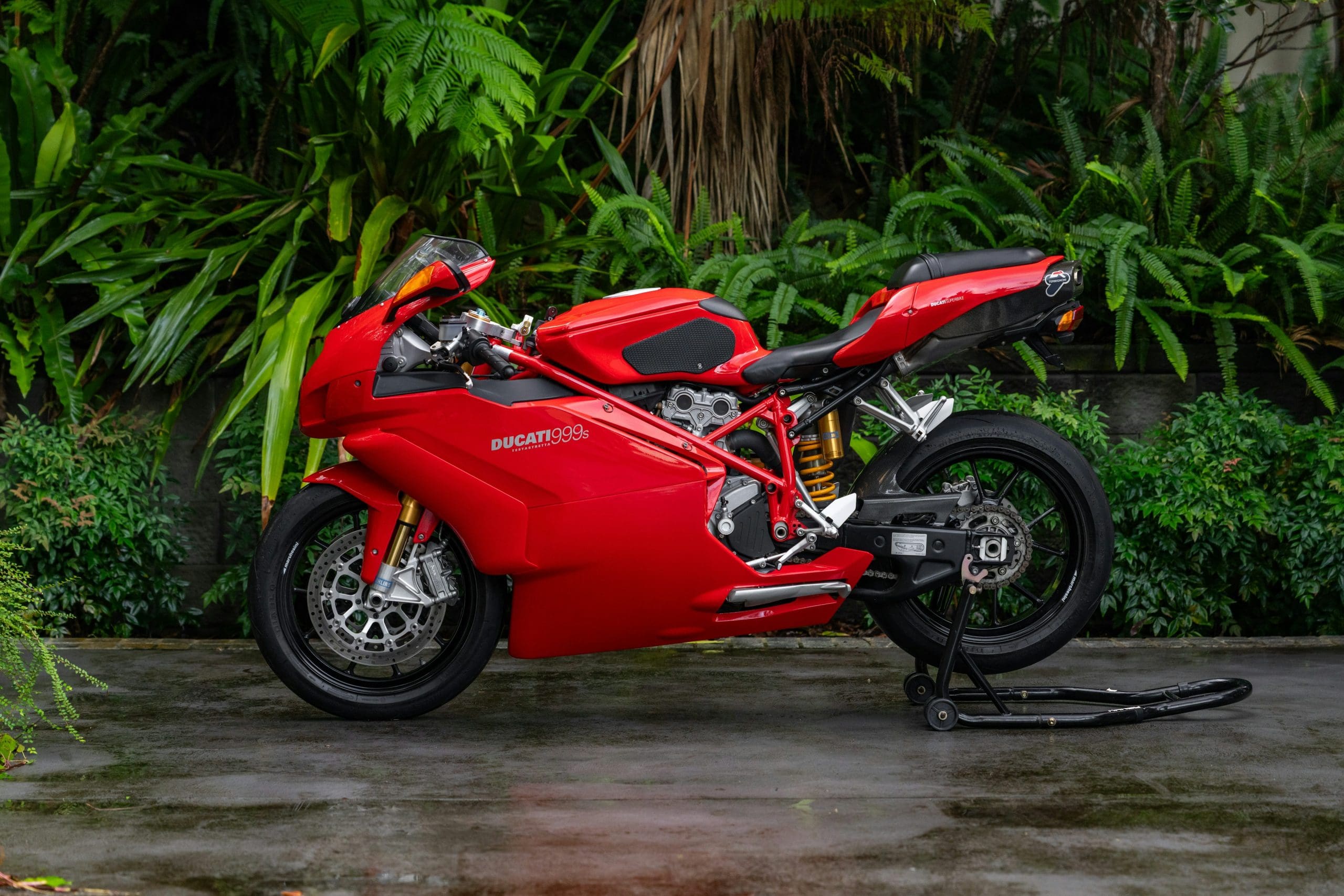
The shift away from that shape finally came in 2003 with the 999, a sharper, more angular design by Pierre Terblanche, the same designer whose Supermono had helped inspire the 916 in the first place. It was, by most technical measures, a better motorcycle: stiffer, more aerodynamic, easier to service. Riders wanted none of it. Sales fell well short of the 916 family’s numbers, and Ducatisti made it clear, loudly and repeatedly, that they wanted Tamburini’s lines back rather than a reinvention.
The Redesign Nobody Wanted
 Credit: Acceleration Times
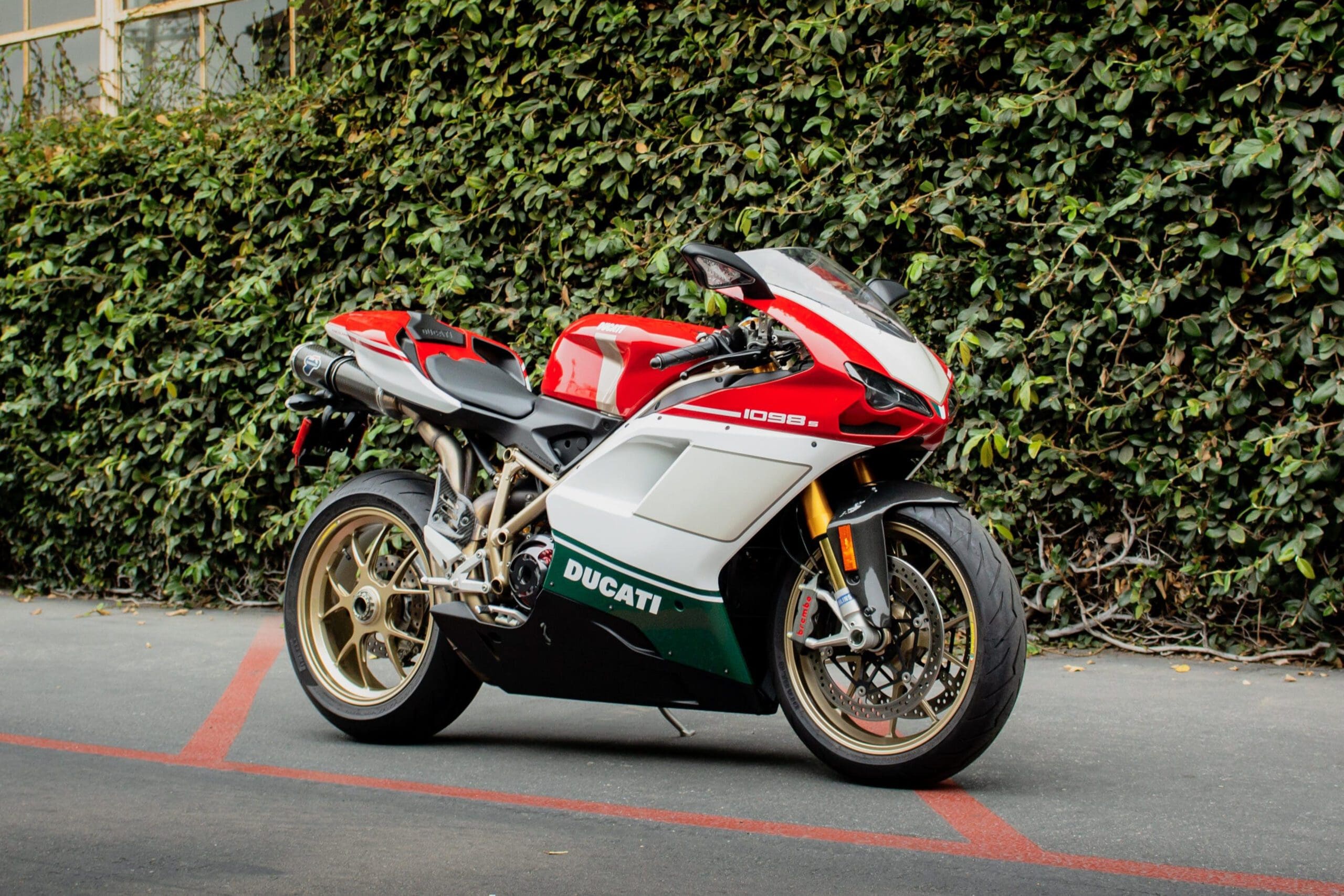
Ducati got the message. The 1098, launched in 2007, deliberately returned to the 916’s proportions, and every superbike built since has followed that same visual language. The tribute came full circle recently with the Panigale V4 25th Anniversario 916, a modern superbike dressed deliberately in the original’s colors and details. Three decades later, the shape Tamburini drew to save a struggling Italian manufacturer is still the shape every Ducati superbike gets judged against.