

rewrite this content and keep HTML tags
Last updated:
The Suzuki GSX-R750 made an immediate impact when it reached dealerships for the 1985 model year. Before it arrived, building a faster motorcycle usually meant one thing, bolting a bigger engine into a heavier frame and accepting the extra weight as the cost of doing business. Suzuki’s engineers flipped that approach, cutting weight first and treating extra power as almost secondary. The result weighed less than some 600s of the era, won races in its first season, and created an entirely new category that every sportbike maker would spend the next decade chasing: the race replica.
Suzuki’s Weight-First Philosophy
 Credit: Autoevolution
Chief engineer Etsuo Yokouchi pushed a genuinely different approach at Suzuki. Rather than adding power and letting weight climb as a side effect, he wanted to strip weight out first and let performance follow from there. He tested the idea on the 1983 RG250 Gamma, a two-stroke race replica sold mostly in Japan and Europe, and again on the Japan-only GSX-R400 a year later. Some enthusiasts give the Gamma more credit than the GSX-R750 itself for solving the aluminum-frame problem first, and there is a fair argument for that. But the Gamma never reached the sales volume or the wider audience that turned the GSX-R750 into a household name.
 Credit : Autoevolution
Suzuki also could not afford to get this wrong. The company’s 1981 sales sat at less than a quarter of Honda’s, so any new flagship needed to be profitable to build, not just impressive on paper. Competitive pressure was mounting fast too. Honda’s 1982 VF750F Interceptor, with its V4 engine and rectangular steel frame, was a genuine departure from the round-tube chassis everyone else was using. It’s widely seen as the bike that forced Suzuki’s hand. Kawasaki’s Ninja 900R and Yamaha’s five-valve FZ750 both followed in the years right after. Suzuki, often viewed as the more conservative of the Japanese manufacturers, needed something that reset the entire conversation rather than simply keeping pace with it.
Building a Racer for the Street
 Credit: Carole Nash
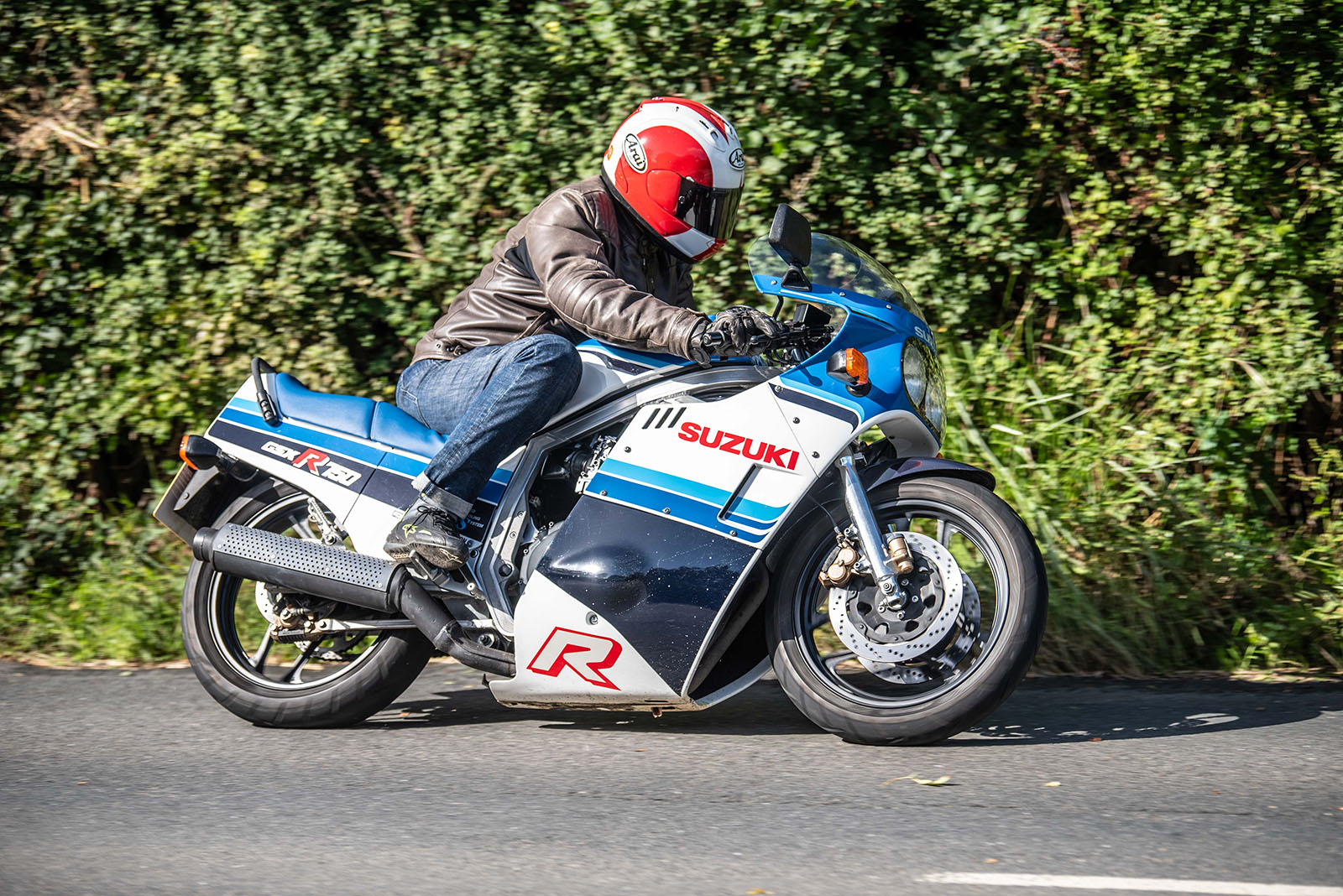
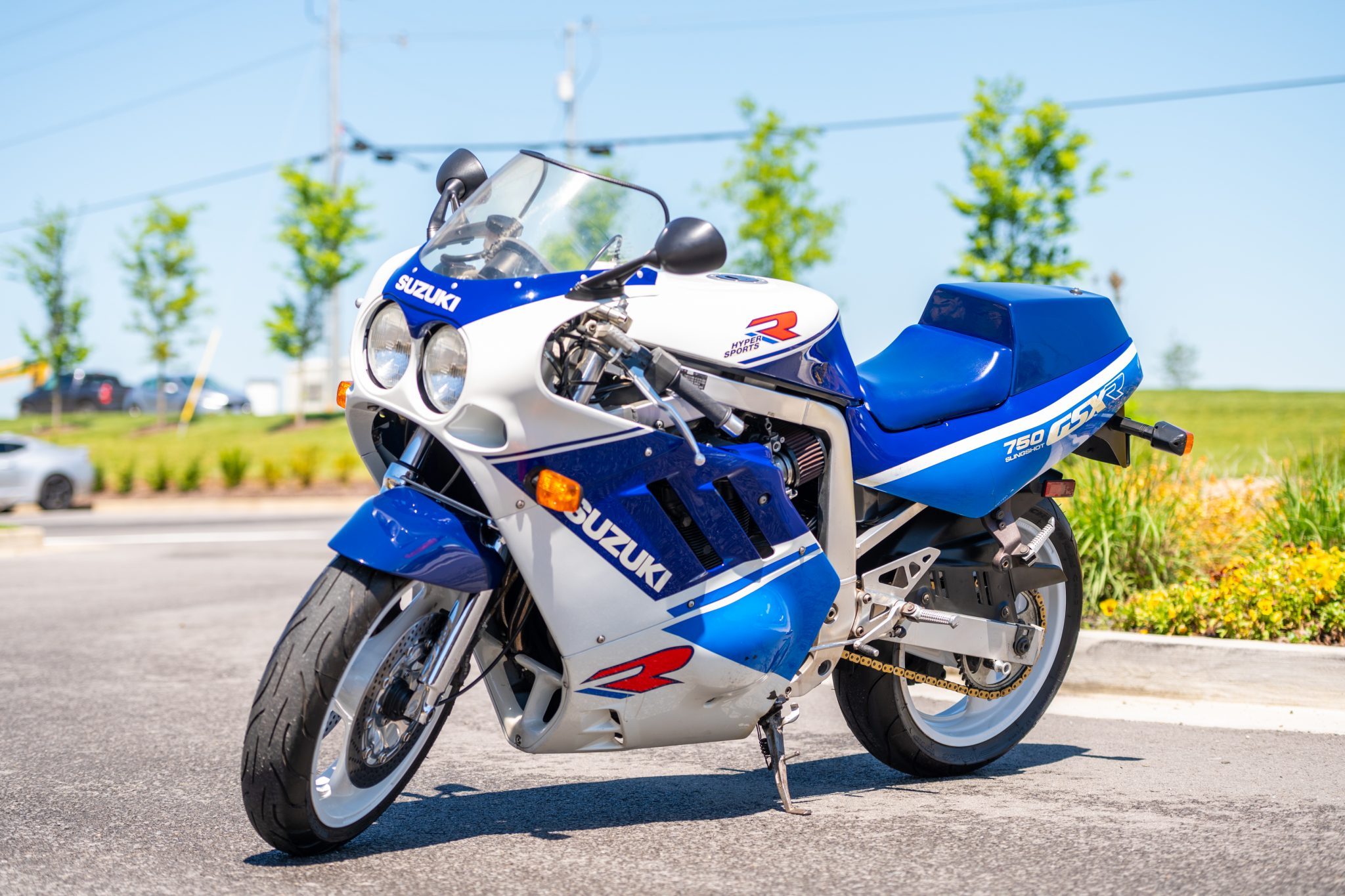
The GSX-R750 was modeled directly on Suzuki’s XR41 endurance racer from the company’s factory Endurance World Championship program. The resemblance ran right down to the twin-beam fairing shape and the box-section aluminum frame. The twin headlights and full fairing made it look like nothing else in a dealership, since most rivals still resembled dressed-up standard bikes rather than genuine race machines. Power came from a 749cc inline four with a 70.0mm bore and 48.7mm stroke, breathing through 29mm Mikuni flatslide carburetors and running a fairly aggressive 9.8:1 compression ratio for the era.
 Credit: Autoevolution
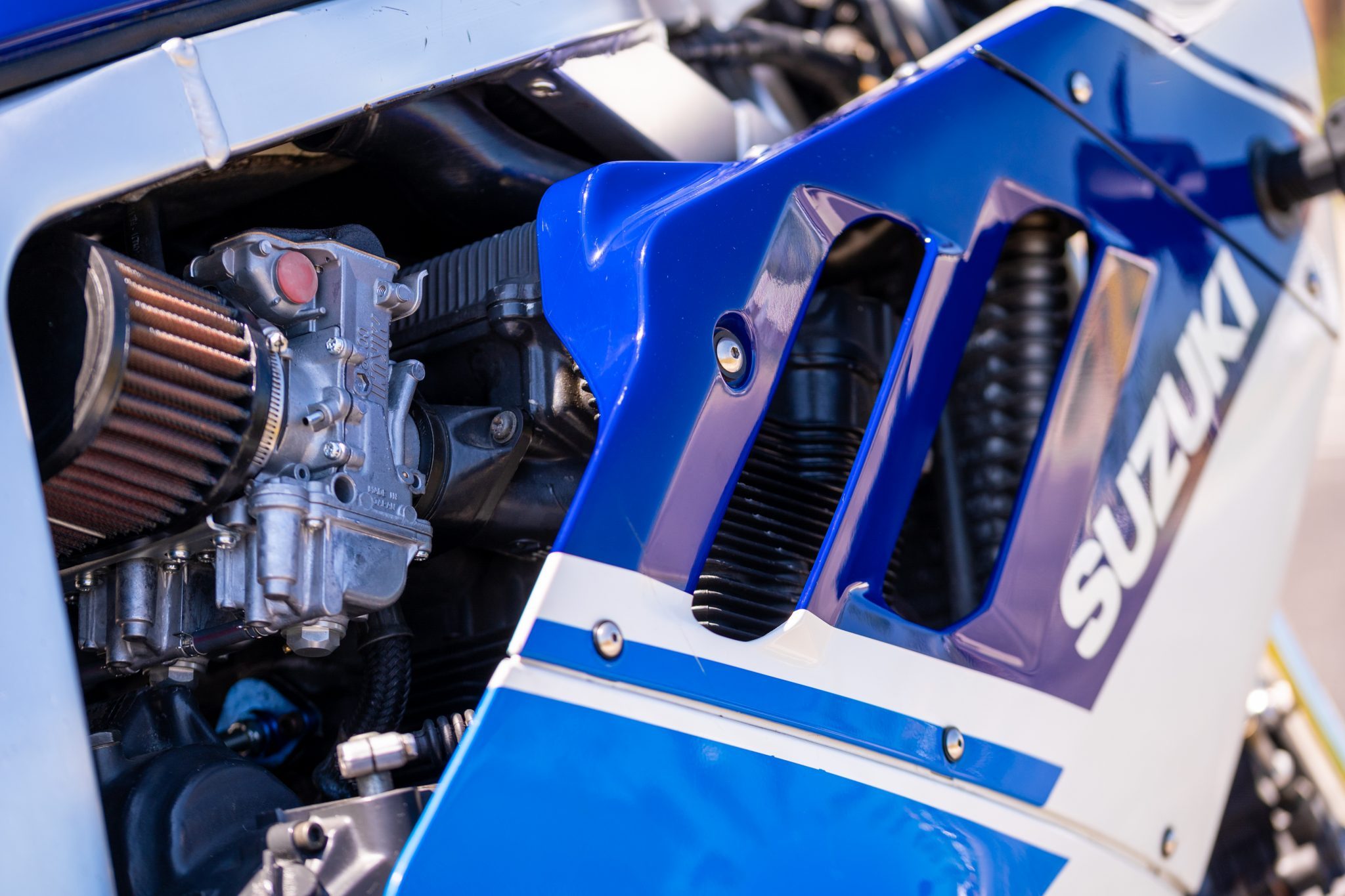
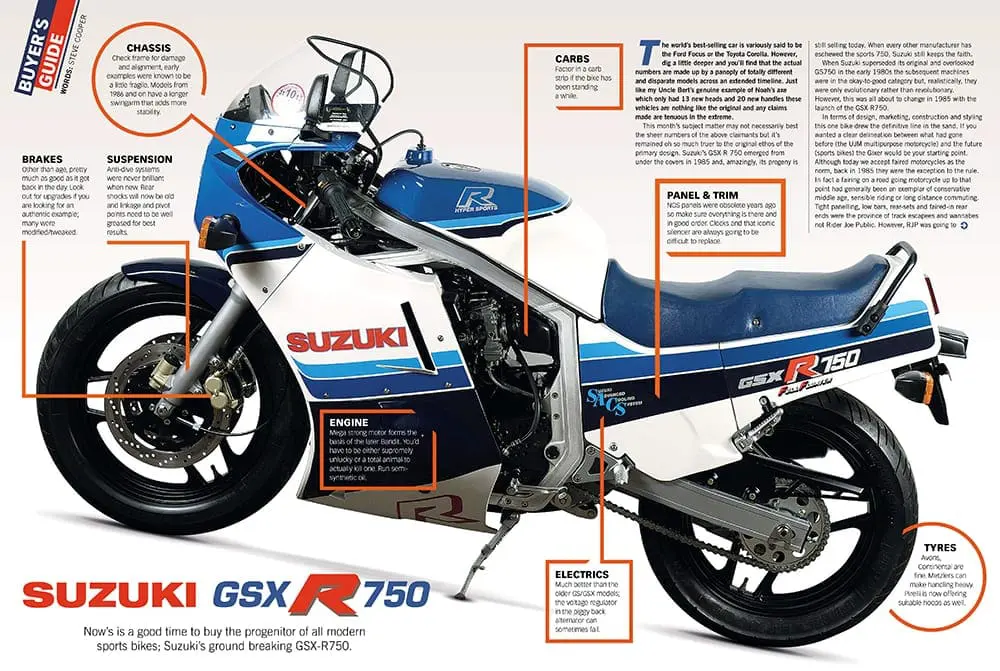
To save weight over a conventional liquid-cooling setup, engineers used SACS, the Suzuki Advanced Cooling System, pumping oil directly to the cylinder head and pistons instead of relying on a radiator. It worked well enough on a racetrack in cool conditions, though riders pushing hard in traffic on a hot day sometimes found the margins tighter than a full water-cooling setup would have allowed. Full Floater rear suspension and anti-dive front forks came straight off the racing program too, both rare features on a mass-production 750 at the time.
A Frame That Weighed Almost Nothing
The aluminum frame itself, which Suzuki called the MR-ALBOX, mixed cast and extruded aluminum sections welded together in new jigs. The alloy itself skipped the post-weld heat treatment most aluminum frames required back then. The finished frame weighed just 17.8 pounds (8.1 kg), an almost absurd number for anyone used to riding around on a steel chassis. That single component arguably did more to define the bike’s character than the engine specifications ever could, and it remains the first thing collectors check when sizing up an original example today.
The Numbers That Stunned Everyone
 Credit: Pinterest
Suzuki unveiled the finished bike at the Cologne Motorcycle Show in October 1984, ahead of its debut as a 1985 model. The claimed output was around 100 horsepower (75 kW), respectable but not shocking for the class at the time. What actually stunned people was the scale of the weight savings. Suzuki quoted a dry weight of roughly 176kg (390 lb), about 33kg lighter than Yamaha’s brand new FZ750 that same year and well over 90 pounds lighter than Honda’s VF750F Interceptor from two years earlier. Suzuki also fitted 110/80-18 and 140/70-18 tires with twin front discs and four-pot calipers, details that mattered more to serious riders than the horsepower figure. A 750 that could out-corner and out-brake bikes with less displacement reset what buyers expected a sportbike to weigh.
Winning Immediately
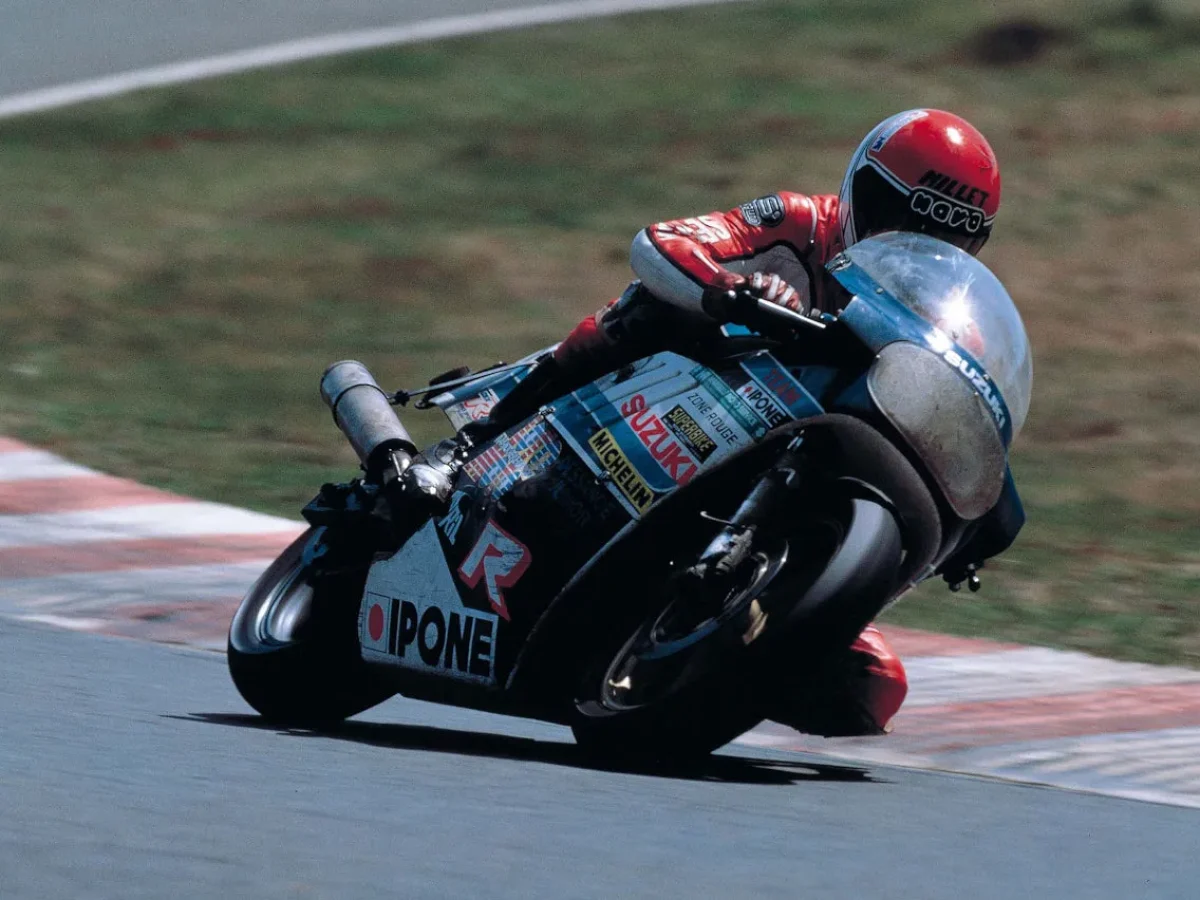 Credit: Espiritu Racer
The racing version proved its worth right away, winning the 1985 Le Mans 24-hour endurance race along with the F1 class of the Japanese National Road Race Championship in its debut season. Commercial demand matched the racing success, with more than 5,700 units sold in Japan alone between March and December of that first year.
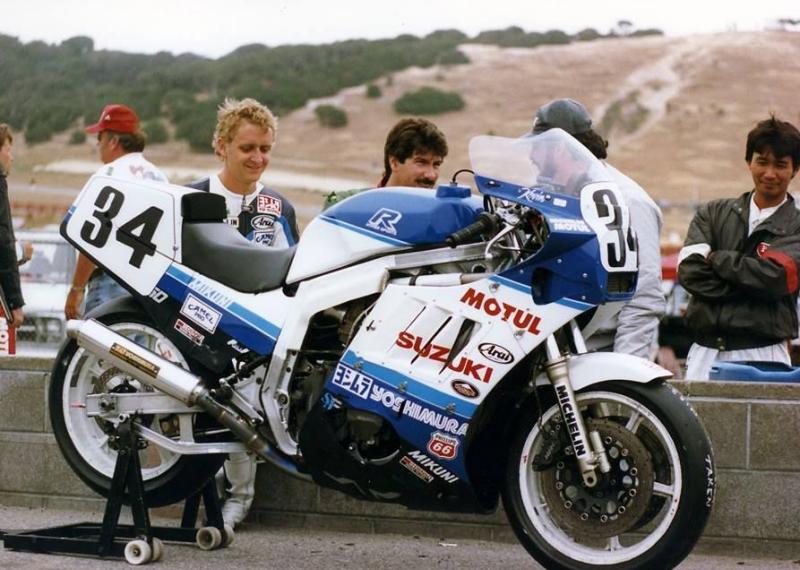 Credit: Moto Rollos
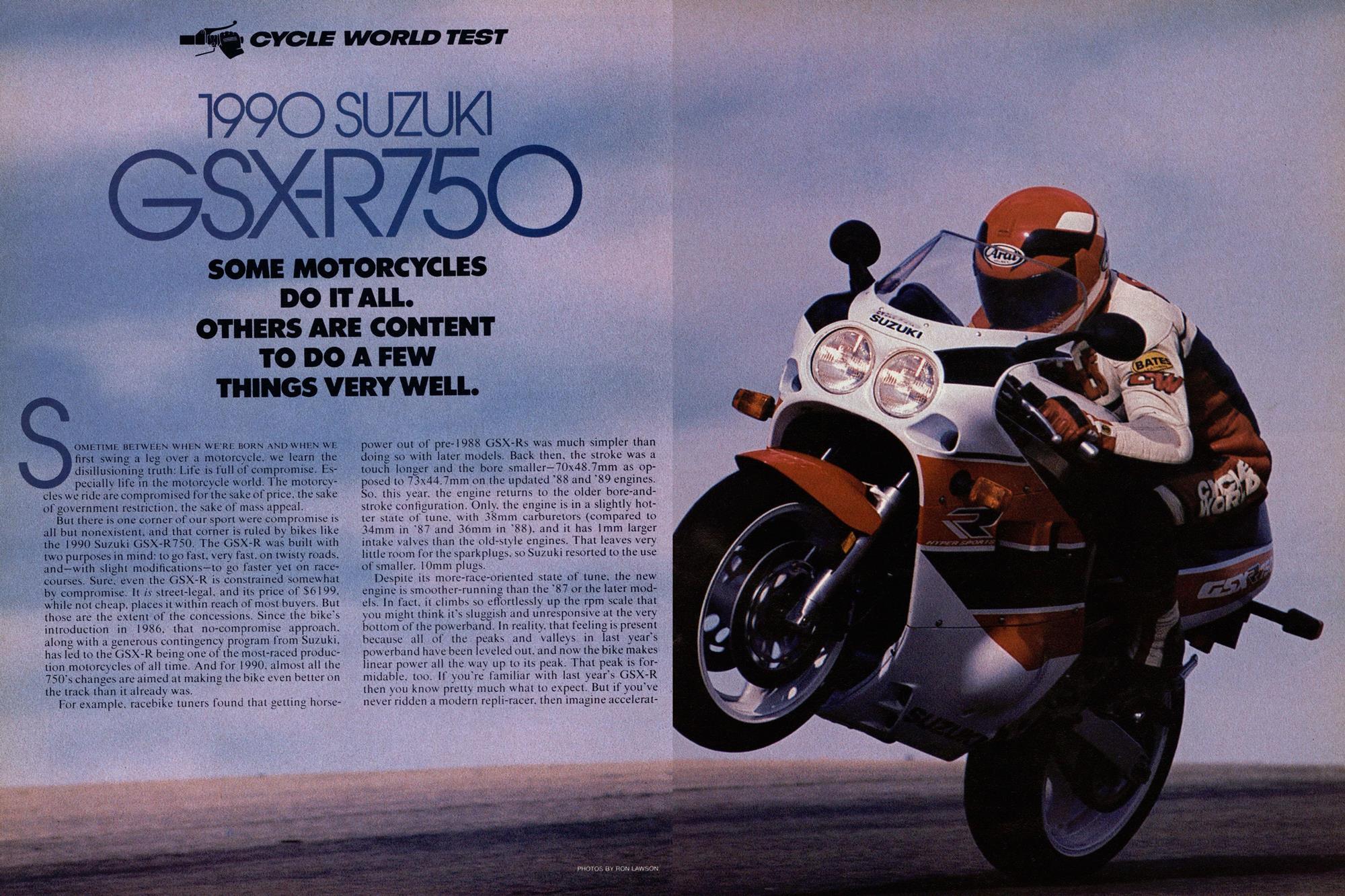
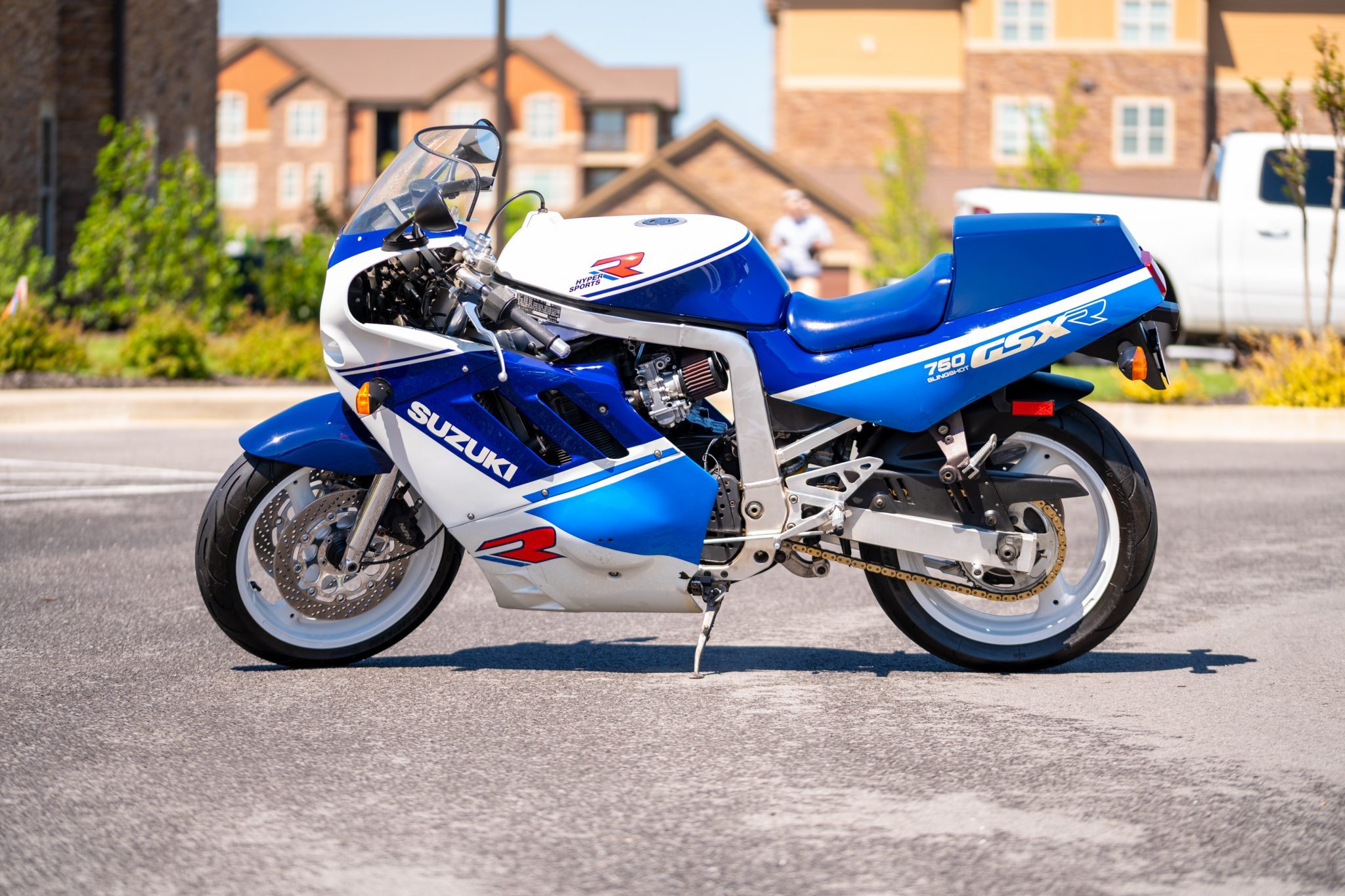
The standard bike did not even reach American showrooms until 1986, a full year behind Japan and Europe, yet demand there caught up fast once it finally arrived. Riders nicknamed those early 1985 through 1987 models “slabbies,” a nod to their flat-sided bodywork, long before anyone had settled on simply calling the whole lineup GSX-Rs. The riding position alone was a reminder that this was built as a racer first and a commuter a distant second, with low clip-on bars and a seat that offered little sympathy on a long ride.
The Most Expensive Japanese Bike You Could Buy
In 1986, Suzuki built a 500-unit homologation special called the GSX-R750R, fitted with a steering damper, dry clutch, and radial tires borrowed from the racing program. Only 199 units made it to the United States. At $6,499.99, it cost 40 percent more than the standard model, making it the priciest Japanese sportbike available that year. It gave serious buyers the closest possible link to the actual race bike.
The Repli-Racer Era Begins
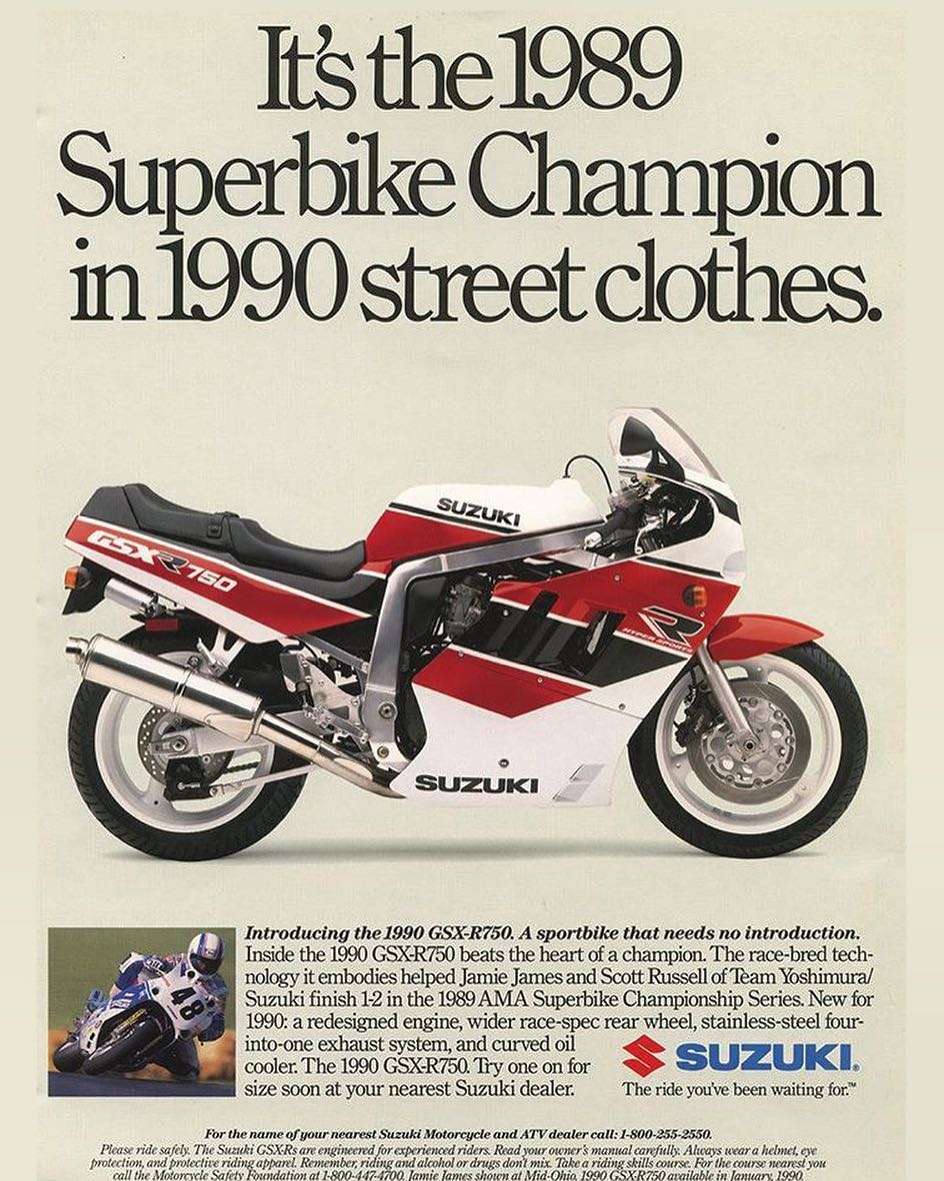 Credit: Pinterest
Every major manufacturer answered within a few years. Honda built the RC30, Yamaha built the FZR, and Kawasaki built the ZXR, each one chasing the same formula of a lightweight chassis wrapped around race-derived running gear. Suzuki itself kept refining the platform almost every season through the late 1980s, updating the frame, suspension, and bodywork rather than resting on the original design’s reputation. The GSX-R nameplate never went away either, and modern versions still carry the same basic promise four decades later.
A well-kept 1985 or 1986 GSX-R750 is a genuinely demanding machine by modern standards, short on wind protection, hard on the wrists, and unforgiving of a poorly balanced set of carburetors. None of that has stopped collectors from chasing clean, original examples, since it remains the bike that convinced an entire industry that lighter, not just stronger, was the way forward.